Showing posts with label Cellular. Show all posts

27 October 2021

Switching Cellular Services in 2021


It’s been over a decade since it has been propitious for me to “go mobile” with cellular services.  My household has remained with Boost Mobile because it offered the most bang for the buck with unlimited talk and texting along with a generous hotspot capability gratis.  The handsets were mostly one generation behind, but they were affordable for replacement, thus obviating the expensive and unsatisfying “phone insurance racket.”

Alas, there have been shifts in the cellular marketplace which prompt a change.  As a thrifty  android aficionado, I regretted that LG decided to leave the cell phone market in July as I owned several iterations of the Stylus.  I had not heard good reviews of the LG Stylo 6 and I hoped that its successor would be worth procuring, but in the US the LG Stylo 7 was not  to be released.  

Boost does offer a Motorola Moto Stylus 5G but it has a higher price point.   I was considering getting a Moto Power, which has most of the features, aside from the stylus and massive built in 128GB RAM, but for less than half the cost.  But handsets are not the only thing in flux.


When T-Mobile merged with Sprint in 2019, federal regulators required the merged company to spin off Sprint’s house MVNO Boost Mobile so that there would be a viable fourth major cell competitor and lessen the likelihood of monopolistic price gouging.  


After some ado, Dish Network acquired Boost Mobile and the feds required T-Mobile to provide seven years of network sharing which would allow Boost could build its own celllular network. Prior to he merger, Boost relied on Sprint’s CDMA old network; however, T-Mobile relies on GSM networks (like much of the world).   Even though the trend amongst cell providers is to create 5G networks, it takes time to transition, especially for Dish’s Boost Mobile as it needs to start from scratch.  


T-Mobile decided to scrap the old CDMA 3G networks.  T-Mobile had sought to decommission the old CDMA network by the end of 2021.  But in pointed T-Mobile press release from  October 21, 2021, it announced that it was delaying the CDMA sunset until March 31, 2022 because its partners had not sufficiently followed through on customer migration to the new network.  Boost Mobile claims the tardy telephone services are post paid and not pre-paid like Boost. 


Despite the network sharing agreement, it requires new SIM cards for Boost’s “Expanded Network” which essentially means switching to 5G capable network.  Some Boost i-Phone customers, may just be able to upgrade their SIM cards.  But for the rest of the low budget customer base, that means new handsets. Although Boost Mobile offered some discounts, they are not remarkable incentives.


Despite being longtime customers, our loyalty is being shaken by provisions when switching from Boost’s “Nationwide Network” (CDMA) to “Extended Network” (a.k.a. GSM towers).  Aside from basically requiring new handsets for Android customers, whenever a retained customer Boosts up to the new network, they must join a new plan.  


Well we have a heritage Family Plan that was grandfathered in at two lines with unlimited talk and text and unlimited (really around 32 GB) data plus 12 GB separate of hotspot data for $80 a month flat (no extra taxes or fees).  It was not clear if two person family plans are available on the “Expanded Network”.  This could mean a $20 “boost” to our bill. 


After several frustrating webchats, a Boost CSR shared a webpage which indicates that a customer can change family plans, which presumably would extend into the new Extended Network.  But this information is contradicted by fine print on Boost’s webpage and frankly many opinions which contradict each other impeaches confidence in this assertion. 


So I considered other carriers.  The major carriers like Verizon, T-mobile and AT&T supposedly have migrated away from iron clad two year contracts with substantial early withdrawal penalties (up to $350).  Instead, this system has been replaced with expensive phones with installment plans over 22 to 36 months, which makes handsets seem so much more affordable, although this is on top of the cost for your phone plan. Taxes needed to be paid up front for the full value of the handset.  Moreover, if a customer switches before the phone is paid off, their contract is only released if the balance is paid off.  On the bright side, at least one can keep the device, but at a high price.


Then I looked at the pre-paids, which are MVNOs (Mobile Virtual Network Operators), which tend to offer good value for money, albeit with some cost cutting.  These savings can derive from not having brick and mortar stores, significantly automating customer contacts, offering older model new phones or encouraging customers to bring their own devices.   Boost is an MVNO which offered curtailed customer service and prior generation devices.  Now that Boost is switching to GSM, it seems that they may be dissuading data driven current customers from remaining to bring in new blood which is interested in inexpensive cellular plans that have less data attached to it.


As this analysis is being written, MetroPCS, a MVNO subsidiary of T-mobile since 2013, has an aggressive pricing plan to lure Boost Mobile and Cricket Wireless customers by offering a $25 a month cellular plan with unlimited talk, text and smartphone data.  This is half the cost of the comparable Boost Mobile plan.  The major difference is that Boost offers a hotspot whereas MetroPCS does not. Plans with hotspots start at $50 with an additional $20 a month surcharge.


To sweeten the deal in switching from Boost or Cricket, MetroPCS offers a free phone, a Samsung Galaxy A32 which on paper has good specs (6.54" screen, 64 GB internal memory, 4 GB ROM, and a 5000 Mah non removable Lith io battery, a quad rear camera with 48/8/5/2MP).  Boost Mobile offers this for $139.  


Frankly, I have my eye on the Motorola Stylus 5G, which has 218GB internal memory but otherwise similar specs for an additional $19.99 with the switch from Boost, whereas Boost Mobile wants $199 for the same handset.


To be fair, Boost is trying to retain customers with the Celero 5G for $49 online if one is invited (actually it rings up at $89.99).  The specs look good but there are some real question marks. Even in pre-order it seems out of stock, yet Boost will immediately charge the customer. Aside from the less discounted price, the manufacturer is not known, so it is buying a pig in a poke (but from my poking around, it’s FCC filings stem from Wingtech, a Hong Kong based company).  If my memory serves correctly, some handset providers from that area had problems with customers’ personal information surreptitious being sent to the Middle Kingdom. No thanks.


Boost Mobile consistently offers contradictory information about those switching to the Extended Network both in stores, on the website and through website chats.  It seems that the emphasis is to sell new handsets, even though the mid and lower priced models are two generations behind competitors, and push their BoostUp program which effectively locks customers in for 18 months.


From a market analysis standpoint, T-mobile through its subsidiary MetroPCS is leveraging its size with loss leaders (such as heavily subsidized handsets and half priced cellular plans) to drive away Boost customers.  This move may deprive DISH Network from having ample capital to build its own 5G network during the remainder of the T-mobile network sharing.  In doing so it may stifle Boost’s nascent attempts to become a fourth major US cell carrier.  


The handsets which MetroPCS has deeply discounted may not be the latest and greatest phones, but they provide plenty of value for money for most customers.  For my desired phone, it would be $180 savings vis-a-vis Boost Mobile website (or $226 via the BoostUp option).  And MetroPCS’s  presumably temporary promotion pricing would save a consumer $720 over two years. 


It is wise to consider what features cellular plan or a handset are crucial when discerning a cellular choice.  My household has prized hotspot tethering because we are often traveling to a place that has no household internet.  That may give Boost an edge.  But there are economic alternatives.  Rather than opt for a pricier plan with MetroPCS, one account could stay with Boost and share the signal while traveling.  There are also cheap prepaid carriers which are al a carte and could be turned on and off when tethering data is needed. There might also be other ways to achieve the occasional objective.   But saving $30 a month for two years is appealing to a thrifty techie.  And good customer service is priceless.  


25 November 2013

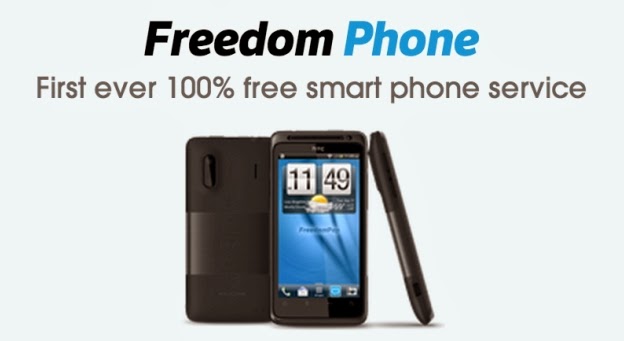
FreedomPop Now Allows Bring Your Own Phones


FreedomPop, a mobile cellular service initially backed by Skype founder Niklas Zennström, has been trying to make good on its slogan: “The Internet is a right, not a privilege” through a freemium business model. 

FreedomPop offers three tiers of phone plans.  The base level gives a customer 200 voice minutes 500 texts and 500 MB of data for $0.  FreedomPop’s e middle tier offers 500 voice minutes, unlimited texts and the 500 MB of data for $7.99.  If a FreedomPop consumer “splurged” to get unlimited voice, unlimited texts and 500 MB of data, it would only cost $10.99.  If a customer needs more, voice minutes are a penny a piece and 1 MB of data for 2.5 cents (or penny per MB for Premium Data subscribers)   FreedomPop does not officially support Hotspot for their handsets. FreedomPop customers are eligible more free services through social networking or participating in surveys et cetera. 

As a  a Mobile Virtual Network Operator (MVNO), FreedomPop does not have to maintain a network and does not entice customers with subsidized brand new handsets in exchange for an expensive iron-clad contract.   FreedomPop utilizes an Voice Over Internet (VOIP) voice and IP.  FreedomPop finds that around 45% of their customers purchase upgraded service. 

During the first ten weeks of FreedomPop Phones, it was offering refurbished HTC Evo 4G Design phones  for $99.  This was a decent price for a free phone service, but the price was not right for a cellular consumer who has a stack of superceded smart phones at his fingertips   But after network partner Sprint finally gave its blessing, FreedomPop can now accept Bring Your Own Devices (BYOD) for unlocked Sprint CDMA cell phones.  This allowed me to repurpose a legacy HTC Evo for a low cost (to no cost) second cell phone line.


Following their Freemium model, FreedomPop phones look to various approaches to monetize.  Much to FreedomPop’s credit, the company moved away from the $0.99 minimum usage charge which they initially attached to their Hotspots.  And data usage is frozen when there is less than 100 MB unless FreedomPop has permission to automatically top it off with a revolving charge.   FreedomPop does assess a $2.74 per month charge for voicemail, which can manually be excluded.  At sign up, customers are offered a complimentary 1 GB bonus, which later converts to a $9.99 a month charge. 

 If a customer took the premium 1 GB of data, the voice mail and unlimited talk and texting, the total bill would be $23.72.   On the one hand, FreedomPop’s $23.73 pricing is slightly more than the PayLo unlimited talk and text for feature phones but includes much more data.  On the other hand, Virgin Mobile offers unlimited texting, 300 voice minutes and unlimited data for $35.

Calls and texts are routed through a FreedomPop application on the smart phone.   Ths underlines that  savvy consumers should not look to MVNOs in isolation for answers about mobile connectivity.

There may be alternatives to the FreedomPop Voicemail.  Since  consumers are unable to port old cell phone numbers during FreedomPop Phone’s ongoing Beta testing period, a good idea is to link a G-mail Account with a new Google Voice number for messages.  Sidebar calling can be done with apps like Google Voice or Talkatone, so one can give the Google Voice number and call the person back using either service.  Google Voice can also move these voice messages into Google Chat.  Google Voice  not only records the message, it sends an email with a transcript (and will even translate it for you). If using this methodology, use the cell phone to authenticate Google Voice.  Necessity is the mother of invention for customizing cellular service for those willing to think outside of the box.

Granted that the sound quality for voice calls is typical of VOIP with a slight latency in signal and what can be characterized as car phone sound quality.  But these are small sacrifices for 200 free voice minutes. 

While FreedomPop cellular service  will have little appeal to “Digerati” who feel compelled to have the latest and greatest phones and think nothing of triple digit cell bills.  But there are some “old school” mobile phone users who are chary about monthly bills who would cotton to a one time charge for a smart phone and not needing to worry about charges for their “emergency” mobile device.  Those who would qualify for a federal Lifeline phone (a.k.a. Obamaphone) would get a much better deal with FreedomPop Phones, but the consumer would need to buy the older handset (which can be found inexpensively on E-Bay).  

As for myself, it is worth considering making FreedomPop a primary mobile carrier.  I use less than 300 voice minutes and 500 texts a month.  However there are times that I use more than 1 Gig of data and I would prefer to have a carrier which allows for Hotspot connections for a tablet. Hence, I will make FreedomPop a secondary phone.