Showing posts with label Tech. Show all posts

22 March 2016

Re-Kindling Appreciation for Amazon's E-Book Reader


Recently, I took a trip to a quiet rural retreat where there was no television, WiFi was non-existent and internet was iffy on my cellular phone. In times past, if one quickly finished reading the books brought on a rainy weekend, it would be time to bide time by polishing doorknobs. Instead, I was able to reach for my Kindle e-ink reader and the literary world was at my fingertips.


I have reveled over Kindles since they initially came on the market.  This travel saga rekindled my appreciation for the Amazon's extraordinary e-book reader. In fact, my household is so fond of our Kindles that each of them is named.  For example, my first Kindle was dubbed  Isadore (named after the patron saint of libraries).  

While I now own several Kindles, I brought my beloved Kindle 2 Keyboard on the get-away. The Kindle 2  series had two types of Whispernet (the complimentary Amazon 3G series).  Fortunately, “Striker” was on the AT&T network, where I was getting five bars of coverage.  So I downloaded a number of samples and tried to choose my next title.  Several of the sample books displayed no more than the table of contents. A couple of sample choices included some of the preface and the first chapter. By surveying the samples, I could narrow down my choice. In fact, reading the samples eliminated titles from a couple of favorite authors based upon style and content.  

When I made my pick, I was able to buy the book and download it in one click and read away. I was excited about a couple of key passages so I highlighted the notes and shared them via Facebook and Twitter through the Whispernet 3G connection.

Although I finished a good chunk of the new book, but my eyes were closing while my mind was still active.  Fortunately, this generation of Kindles still had the text to speech option and built in speaker so a synthetic voice could read me to sleep.   The next morning, my traveling companion who is a techno-luddite seem amazed that I bought and read another book even in this remote retreat.

The Kindle came in handy as I purused other books because of the built in dictionary. The Kindle 2 has a keyboard which is OK for short notetaking, but one should not expect to pen the great American novel on it, and transferring the files can be challenging.

The feature that I treasure from this version of the Kindle E-reader is the “Experimental” internet browser.  Later versions of the Kindle e-reader restricted internet access to the Kindle Store and Wikipedia.  The Kindle 2 allowed for some web surfing of text based websites.  This was a God send for a news junkie like me. 

One new glitch from “Striker” is that it would not display Wikipedia listings neither from the experimental browser nor the automated Wikipedia search.  As the weekend progressed, I was disappointed as I had grown accustomed to spot checking facts and could not do so easily with this Kindle.  Perhaps on a related note, this Kindle was not recognizing the Kininstant bookmark shortener.

“Striker” is my third Kindle e-reader, as two had to be replaced because of screen problems thru Amazon’s unconditional return policy (at the time) for Kindles. The design was a marked improvement over the large cheese wedge Kindle 1. That being said, the unit did have a replaceable battery and allowed SD card storage. But the only difference that “Striker” had over my first K2 was that it was on the AT&T  Whispernet  which could get international 3G as opposed to just the Sprint CDMA Whispernet in the USA.

Alas, “Striker” was showing its age, as the Lithium Polymer battery could only hold a charge for several hours and then would immediately drain out. Perhaps this was due to battery memory as well as a battery which needed to be replaced.  I have considered acquiring a Kindle replacement battery for around $25 but I worry about doing the installation myself and bricking it.  Unfortunately, computer repair shops don’t want to take on the challenge of installation either.

Most people would be inclined just to get a new device, as surely Amazon has developed the latest and greatest e-reader.  But a Thrifty Techie realizes that it ain’t necessarily so. The Kindle Voyager and Kindle Paperwhite models (7th & 6th Generations) do have lit screens for night reading and extended battery life.  The Kindles has have  some new features like Vocabulary Builder and X-Ray title summaries.  Alas, when Amazon giveth, it has also taken away.  No longer do e-readers have speakers or headphone jacks, so text to speech is out of the question (it is available on the Kindle Fire models though).  If you pay $50 more, a Voyage or Paperwhite can have 3G capabilities, but that it now restricted to the Kindle Store and Wikipedia.  Amazon also sells an 8 Gig Kindle Fire tablet for $49 (which has text to speech) but the color backlit screen can cause eye fatigue for prolonged reading stints and may be tough the see reading outside. From a Thrifty-Techie’s perspective, newer isn’t necessarily better.   

I was resigned to make do with what I had, but an imminent Amazon Kindle software update forced my hand. As I was prepping my vintage e-readers for the mandatory download, I noticed that “Herbie 2", a Kindle Keyboard 3rd Gen (with WiFi) that I inherited from an inlaw was showing dead pixels.  These e-reader screens can be quite sensitive to pressure.  Herbie 1 had to be replaced when a teacup poodle sat on it. All but the top of the screen displayed correctly, but it would be maddening to use it as an e-reader.

  
After some investigation on E-bay, I found an upgraded used Kindle Keyboard 3rd Gen with WiFi and 3G for $32 with shipping.  This means that it would have text to speech, the ungoverned experimental browser with about 4 gig of storage (enough for 3500 books). This design does not have a touch screen, which I consider is an advantage on a dedicated e-reader, so as not having fingerprints on the screen.  The downsides are that it does not come with a power cord (but I already have several).  Another variable is the condition of the battery. 


Although I will probably have to manually do the software update, it seems like it is worth the trade off. So I am happy to include another Kindle into the Thrifty-Techie family.


25 November 2013

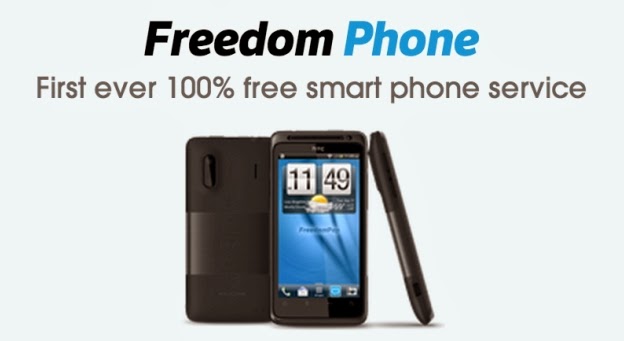
FreedomPop Now Allows Bring Your Own Phones


FreedomPop, a mobile cellular service initially backed by Skype founder Niklas Zennström, has been trying to make good on its slogan: “The Internet is a right, not a privilege” through a freemium business model. 

FreedomPop offers three tiers of phone plans.  The base level gives a customer 200 voice minutes 500 texts and 500 MB of data for $0.  FreedomPop’s e middle tier offers 500 voice minutes, unlimited texts and the 500 MB of data for $7.99.  If a FreedomPop consumer “splurged” to get unlimited voice, unlimited texts and 500 MB of data, it would only cost $10.99.  If a customer needs more, voice minutes are a penny a piece and 1 MB of data for 2.5 cents (or penny per MB for Premium Data subscribers)   FreedomPop does not officially support Hotspot for their handsets. FreedomPop customers are eligible more free services through social networking or participating in surveys et cetera. 

As a  a Mobile Virtual Network Operator (MVNO), FreedomPop does not have to maintain a network and does not entice customers with subsidized brand new handsets in exchange for an expensive iron-clad contract.   FreedomPop utilizes an Voice Over Internet (VOIP) voice and IP.  FreedomPop finds that around 45% of their customers purchase upgraded service. 

During the first ten weeks of FreedomPop Phones, it was offering refurbished HTC Evo 4G Design phones  for $99.  This was a decent price for a free phone service, but the price was not right for a cellular consumer who has a stack of superceded smart phones at his fingertips   But after network partner Sprint finally gave its blessing, FreedomPop can now accept Bring Your Own Devices (BYOD) for unlocked Sprint CDMA cell phones.  This allowed me to repurpose a legacy HTC Evo for a low cost (to no cost) second cell phone line.


Following their Freemium model, FreedomPop phones look to various approaches to monetize.  Much to FreedomPop’s credit, the company moved away from the $0.99 minimum usage charge which they initially attached to their Hotspots.  And data usage is frozen when there is less than 100 MB unless FreedomPop has permission to automatically top it off with a revolving charge.   FreedomPop does assess a $2.74 per month charge for voicemail, which can manually be excluded.  At sign up, customers are offered a complimentary 1 GB bonus, which later converts to a $9.99 a month charge. 

 If a customer took the premium 1 GB of data, the voice mail and unlimited talk and texting, the total bill would be $23.72.   On the one hand, FreedomPop’s $23.73 pricing is slightly more than the PayLo unlimited talk and text for feature phones but includes much more data.  On the other hand, Virgin Mobile offers unlimited texting, 300 voice minutes and unlimited data for $35.

Calls and texts are routed through a FreedomPop application on the smart phone.   Ths underlines that  savvy consumers should not look to MVNOs in isolation for answers about mobile connectivity.

There may be alternatives to the FreedomPop Voicemail.  Since  consumers are unable to port old cell phone numbers during FreedomPop Phone’s ongoing Beta testing period, a good idea is to link a G-mail Account with a new Google Voice number for messages.  Sidebar calling can be done with apps like Google Voice or Talkatone, so one can give the Google Voice number and call the person back using either service.  Google Voice can also move these voice messages into Google Chat.  Google Voice  not only records the message, it sends an email with a transcript (and will even translate it for you). If using this methodology, use the cell phone to authenticate Google Voice.  Necessity is the mother of invention for customizing cellular service for those willing to think outside of the box.

Granted that the sound quality for voice calls is typical of VOIP with a slight latency in signal and what can be characterized as car phone sound quality.  But these are small sacrifices for 200 free voice minutes. 

While FreedomPop cellular service  will have little appeal to “Digerati” who feel compelled to have the latest and greatest phones and think nothing of triple digit cell bills.  But there are some “old school” mobile phone users who are chary about monthly bills who would cotton to a one time charge for a smart phone and not needing to worry about charges for their “emergency” mobile device.  Those who would qualify for a federal Lifeline phone (a.k.a. Obamaphone) would get a much better deal with FreedomPop Phones, but the consumer would need to buy the older handset (which can be found inexpensively on E-Bay).  

As for myself, it is worth considering making FreedomPop a primary mobile carrier.  I use less than 300 voice minutes and 500 texts a month.  However there are times that I use more than 1 Gig of data and I would prefer to have a carrier which allows for Hotspot connections for a tablet. Hence, I will make FreedomPop a secondary phone.

22 November 2013

Surveying the Surfeit of Cheap Tablets


As Black Friday and Cyber Monday approaches, many merchants are highlighting inexpensive tablet computers as doorbusters or loss leaders to gin up overall Christmas holiday sales.  But before making impulse electronics purchases, it is wise to consider how you would use a tablet in mobile computing.  

It used to be that tablets were the ideal media consumption device. Tablets with 7" to 10" screens allow an individual to have an almost immersive view of videos.  Applications (a.k.a. apps) generally provided shortcuts which facilitated internet interactions.  Some tablets like the Nook and the Kindle were more e-ink reading devices which could have proto-tablet functions (checking e-mail, Wikipedia, and text based websites).  But Amazon’s Kindle Fire sought to be a loss leader which was a shopping portal doubling as an entertainment device.   Samsung’s strong showing with its Galaxy Tablets as well as the “phablet” Note series sought to tie tablets to cellular carriers.


Discern what are your mobile computing needs.  If you want a communications device with a larger screen (and you don’t mind carrying a 5.5" device in a pocket or a purse), then a “phablet” like the Samsung Note may be the best choice for you.  Many retailers will be offering enticing prices for such hybrid phone/tablets, but be prepared to be locked into a cellular carrier for a year or two.  If you want to keep having the latest and greatest devices, look into the early upgrade programs from major cellular carriers. 

Tablets sales used to be driven by Apple’s i-Pad, which came out in 2010.  The i-Pad still wins 29.6% of the tablet market while asking for a premium price that is rarely discounted.  While this writer is not purposely not part of the Apple cult, if one feels compelled to buy an Apple for its reputation of ease of use, enticing design or to keep up with the Jones’, then buy an i-Pad and sleep in on Black Friday.


As an electronics consumer, I like to get the most bang for my buck with tables and not be limited by a vertical monopoly manufacturer.   Currently I own a couple of Amazon Kindles and a WebOS HP Touchpad.  I love to read on an e-ink device like the Kindle.  Unfortunately, my Kindle 2 (with the slow but unrestricted 3G coverage) is losing its charge and computer geeks are reluctant to change out the battery.  While the Amazon Kindle Paperwhite provides even better e-ink resolution, the newer model has dropped the headphones option and the text-to-speech feature.  For my purposes. the text-to-speech ability is important for times which I want to enjoy books but can not have my eyes on the screen.  But text-to-speech is included in the Kindle Fires.

Regarding my HP Touchpad, I knew that it was a dead-end from the moment I acquired it in the HP fire-sale in the August 2011.  But WebOs is an elegant operating system and the HP Touchpad had upscale features.  Two years later, it is running fine and should be serviceable for the foreseeable future.  Alas, there are not many new WebOs applications available.  In order to use some hotspots, there are apps that are necessary and I am reluctant to make it a dual booting Android tablet.  So between an ailing e-reader and a red headed stepchild tablet, I have my eye out on the surfeit of cheap tablets.

 Some have tried to take advantage of the slow demise of the Barnes and Noble Nook by using the SD card as an Android boot.  It can work, but realize that the Nooks OS takes up nearly 3/4ths of an 8 GB e-reader.  The 16 GB Nook HD tablets (list $150) offer more storage.  But there are serious questions to the long term viability of the Nook.  So it may only be good for reconfigured use or as a stuck in time tablet. 


Having owned several Kindles over the past four years, I am entrenched in Amazon’s e-reader market.  The Amazon Kindle Fire HD has achieved around 5% market share, but it should suffice for my own  supplemental tablet/ infotainment needs.  Although a 16 GB Kindle Fire HD (list  now $169) has a 7" screen is markedly smaller than the 9.7" HP Touchpad screen, it is a more manageable size for e-reading functions.  Moreover, my mobile computing needs have not been as video oriented.  The Kindle Fire HD has Bluetooth, which should allow a wireless keyboard for productivity.  The Kindle Fire HD  does allow for hotspot connection hence  buying a 4G version is costly and unnecessary.  

For those interested in getting Black Friday bargains for the Amazon Fire, be aware that the discounts will be for the Fire HD (2nd generation) not the newer Fire HDX.


If one can live without using a tablet as a camera or a phone or having the “Mayday” feature, the HD will have most of the improvements of Kindle Fire OS 3.0 “Mojito “ (a forked version of Android).   Many of the cut rate Kindle Fires are 8 GB (which should leave around 6 GB for internal storage along with the cloud).


While most mobile computing people look to tablets as a media consumption device, some industrious individuals want to have a tablet that is a  quasi laptop without the bulk or balking at the price of a MacBook Air (list $999).  When Microsoft entered the tablet market, it tried to appeal to such customers with the Microsoft Surface RT.  The price point of the Microsoft  Surface 2  (list $449) rivals that of the i-Pad (list $499), but Microsoft throws in fully functioning version of Office and 200 GB of SkyDrive storage and plenty of cloud storage, features which generally cost extra elsewhere.


The 10.6" touch screen of the Microsoft Surface makes full use of Metro interface, but if one wishes to run old programs, it is necessary to buy a Microsoft Surface Pro (list $899), which is much pricier.   The big tiles on the start screen are customizable and offer updated embedded information.  The Surface RT allows multitasking.  

The body of the Microsoft Surface RT includes a built in kick stand.  The Surface RT has micro SDSX ports allowing users to add memory.  The magnetic Touch Cover is ordinarily a $100 add on which both protects the screen and is a keyboard.  While the Windows Apps store is not as robust as the Android or i-store, they claim that plenty of apps are free. 

If you have Surface appeal, it is possible to find a Surface RT for under $200 during Black Friday sales, but it would be wise to look for sales which a buyer tne pays a little more and includes the Touch Cover. 

There will be plenty of Black Friday sales on Android tablets.   If Android tablets have an appeal, determine which version of OS the hardware has, as earlier versions of Android  (prior to 4.0“Jelly Bean”) are not optimized to tablet proportions. Also be aware of how much storage is on the tablet.  A $40 tablet that only boasts 4GB will barely hold one movie.  That might be good enough for kinderspiel but would quickly be condemned to the land of misfit toys for most other tablet users. 

This holiday shopping season it may be easy to acquire a tablet but take the time to choose the right tablet for you. Consumers who are content to pay premium prices for an entertainment consumption device which is touted to work out of the box should opt for an i-Pad. Busy businessmen may want the Microsoft Surface to be able to do Office work while surfing the web on their tablets.  Those who want an all in one mobile communications device should consider a “phablet” like the Samsung Galaxy Note.  Avid readers who want the functionality of a tablet should lean towards the Amazon Kindle Fire.  And there are a variety of inexpensive Android tablets which may motivate impulse shoppers.

h/t: BFAds

16 October 2013

Why Don’t People Answer the Call to Cellular Phone Savings?


One of the costly monthly expenses for most households in America is their cellular phone bill.  The CTIA Wireless Association estimates that average cell phone bill was $47 in 2012 but many individuals pay double that amount.  The CTIA figures do not factor in the costs of handsets or choices for “reasonable” plans

Smart phone consumers comprise 46% of the market (including 66% of youths aged 21-30).    The CTIA figures do not factor in the costs of handsets or choices for “reasonable” plans.  So there may be a low cost plan, but if one is required to carry a data package, monthly costs precipitously increase.

Another reality is that the most of the major American cellular carriers push subsidized phones with strict two year agreements.  Few cellular consumers consider the overall costs incurred with such a subsidized cell phone contract.  Such customers are  are more concerned about getting what they perceive is the latest and greatest handset for a couple of hundred dollars down (usually 1/3rd of the actual cost) while paying a significantly higher amount in the monthly cellular bill then they might pay otherwise.  

Tero Kuittinen, an independent market analyst from Alekstra, notes: "That psychology has worked for hundreds of years, and it’s still working.”   Another factor to consider is the attachment that many people feel toward their cellular purchases.  AT and T retained gripping customers for years because it retained a monopoly on i-Phones, which had a less generous plan and cost more than other smartphones, but those in the Apple cult craved it.  It seems akin to the mentality which drives new car purchases that customers will overspend to get that “new car smell” for a durable that loses 20% immediately after purchase. 

T-Mobile took the lead among cell providers in weaning prospective customers from the subsidized cell phone model with their Simple Choice plan.  But an  alternate model which T-Mobile innovated but had more success in competitors emulating is the “Next, Edge, Jump” and “OneUp”.  These programs which are essentially cell phone installment payment plans.  Consumers lease a phone by paying a bit extra ($10-20 a month plus up to $10 for the privilege) for 20 to 24 months  but with the ability  to upgrade in six months to a year.  But if consumers do not “jump”, then they will pay significantly more as there is no subsidy underwriting the purchase. This sort of gimmick may have some appeal to digerati would constantly want to upgrade without being locked in a contract, even though they are effectively locked in a contract.

Alas, cell phone services are not fungible.  Aside from the handset cost, choice of carriers are impacted by coverage.  An inexpensive plan is worthless if one does not get range in one’s preferred calling area.  Verizon Wireless has the best coverage but people pay a premium for the extensive coverage.  But most customers may not need such extensive range.

Cost conscious consumers should know that they can cut their cellular costs in half (or more), by using Mobile Virtual Network Operators (MVNOs), pre-paid cell plans and fremium cell providers like FreedomPop. But the reality is that according to Ovum, only 23% of cellular customer have opted for such frugal mobile phone service. 

 As MNVOs and the ilk do not have the deep pockets for advertising, they have a dubious reputation.  In fact, when breaking up with Sprint to switch to one of its MVNOs Virgin Mobile to save half on cell costs, the customer service representative thought that it was a compelling argument to sneer “Well, that’s a pre-paid phone”.   As a customer who had been off his contract for over a year and did not need another handset, that was a less than convincing ploy. 

Usually, second tier cellular carriers offer less current handsets.  Even though these cell phones may only have been on the market for six months, finicky consumers turn their noses at these out of data handsets.  Sometimes, upgrades are prudent, such as switching from a 3G phone to one that also gets faster 4G or LTE coverage.  But when a new release is buggy, or simply has minor cosmetic changes, a savvy consumer should question whether the latest is really the greatest. Of course, with Apple i-phones, a consumer can not replace the rechargable battery himself, so it may only be good for around 18 months before starts to need replacement.

Personally, I have always considered the cellular phone plan to be more important than the particular handset.  In addition, I tend to baby my cell phone, so it has less wear and tear on the unit. But my experience switching cellular carriers from a Sprint HTC Evo with a 4.3" capacitive screen to a Virgini Mobile Samsung Victory (Galaxy II) with a 4.0" but with 4G LTE has demonstrated that the slight difference in display size impacts inputting on a virtual QWERTY.  

What may drive my decision to switch cellular companies again is whether FreedomPop allows for Bring Your Own Devices with their Freemium model roll out.  I would not buy one of FreedomPop’s outdated and refurbished HTC Evo Designs for $99 (or later $149), but I would happily switch to FreedomPop to get 200 voice minutes, 500 texts and 500 MB of data for free.  FreedomPop is relying on consumers to add on to their free base.  I might get unlimited calls and texts with a half Gig of data for $10.99.  But since FreedomPop will allow for tethering (hotspots) and they charge $10 per Gig of data, my old HTC Evo might be a supplemental hotspot for months that I need it. 

In another phase of its Un-carrier campaign, T-Mobile tried to  wreck the international roaming racket. T-Mobile stopped charging more for international text for Simple Choice customers when sending to 100+ countries.  Calls to Simple Global countries aside from the US are at $0.20 a minute.  Most importantly, there is no outrageous international data roaming charges at standard speeds.   However  there are some caveats to this International Roaming largesse.

Alas, T-Mobile considers 2G (or 128 kbs) to be an ideal speed for e-mail, social media, web pages and navigation but it such speeds would be painfully slow for graphic intensive applications.  So T-Mobile also offers three speed boost plans for international travelers.  One day of higher data speed (100 MB) for $15, one week (200 MB) for $25 and two weeks (500 MB) for $50.  This would be good for international travelers keeping in touch at home but operating on a guarded basis .  Since T-Mobile allows BYOD for GSM phones, it might pay for a traveler not taking a quick jaunt overseas to pick up an old unlocked GSM phone and sticking with T-Mobile.  Or they could just use that unlocked GSM phone with local SIM cards.  

As America enters harder economic times, more consumers may try to beat the high cost of living by answering the call to cheaper cellular services.

h/t: The Joy of Tech

09 October 2013

FreedomPop's First Foray in Cheap Cellular Service


FreedomPop is an internet service provider started by Skype co- founder Niklas Zennstrom with a motto "The Internet is a right and not a privilege".  FreedomPop seeks to expand its reach in providing "Free access for all" with its first foray in cheap cellular phone service.


FreedomPop is operating as a Mobile Virtual Network Operator (MVNO) based off of Sprint's network, primarily using the CDMA and WiMax capabilities and eventually using LTE.  FreedomPop is structuring its consumer cellular offering on a freemium model.   A basic consumer receives 200 voice minutes, 500 texts and 500 MB of 4G data along with free calls to other FreedomPop customers for the amazing low price of free!  And there is no contract to boot.

FreedomPop's CEO Stephen Stokols proudly proclaimed that a customer paying $1,500 for cellular service could cut their bill by 2/3rds with FreedomPop.  Stokols said: "That is real value, real savings and a real meteor to the current market dynamics."

How can FreedomPop give consumers gratis basic cellular service?  The Freemium model is designed to entice subscribers to pay a little for more.   Based on its experience offering Freemium service for hotspots, FreedomPop expects 45% of its customers to pay a little more for their low cost monthly plans.   A customer paying $7.99 a month gets 500 anytime voice minutes, unlimited texting and the 500 MB of data.  A customer "splurging" by paying $10.99 a month gets unlimited voice, unlimited texting and 500 MB of data.

Another aspect of the Freemium model is engaging customers in social media.  The FreedomPop hotspots gave consumers opportunities to get more service by speading the word to their friends and participating in sponsors offers.  This is useful for customers who do not mind peer-to-peer marketing or spending their time to save money. 

Much like the shifting spectrums in the cellular communication industry, where FreedomPop will rack up fees is on data.  The basic 500 MB is sufficient only for checking e-mails or viewing static, text based websites. A FreedomPop phone consumer who opts for the Premium data plan gets 1 GB for $10 a month (first month free).  After a consumer uses their alloted monthly data, it is $0.01 a MB, or around $10 a GB. 

As an MVNO, FreedomPop is maximizing Sprint's over-capacity.  Sprint has migrated from the slower 4G WiMax  service to 4G LTE data, which allows MVNOs to utilize the inchoate WiMax mobile data until Sprint stops servicing WiMax data.  Sprint had planned to keep WiMax going through 2015, but Sprint's total acquisition of ClearWire (which provided the WiMax backbone) might change those plans.

Another means which FreedomPop offers value for consumers while providing a profit center is with the handsets.   FreedomPop is selling refurbished Sprint smartphones.  During their beta phase of phone roll-out, FreedomPop is selling refurbished HTC Evo Design phones for $99.99 (but will eventually cost $149.99)  but without contract. 

From a price standpoint, $100 for a no contract smartphone sounds like a good deal.  But the HTC Evo Design is a smartphone with 4.0" inch screen, a single core processer running Android 4.0 OS (Ice Cream Sandwich) with 3G/4G WiMax.  When the HTC Evo Design premiered in October 2011, it was a considered mid range smartphone.   FreedomPop will be selling a two year old refurbished cell phone for $100/$150 when it sells for much less on Ebay.

As a cellular phone consumer, I am not  someone who needs to have the latest and greatest handsets.  I have bought and been happy using some refurbished cellphones.  However, I am chary about paying more than street value for a two year old cell phone without new technology guarantees.  The HTC Evo Design has 4G WiMax which is fine (where available), but a cost conscious consumer should be mindful that his handset may only have a usable shelf life of just over a year, presuming that Sprint does not turn off WiMax prematurely.

FreedomPop hopes to have more handsets for sale later in 2013, some with 4G LTE data capability.  FreedomPop always intends to have a $100 handset available.   FreedomPop may allow for Bring Your Own Devices (BYOD) from Sprint.   There is some speculation that FreedomPop could follow the incremental purchase plans for expensive smartphones, like T-Mobile, AT and T, Verizon Wireless and now Sprint have done, charging perhaps $30 a month to effectively rent a handset.

Another way that FreedomPop's Phone service can offer their inexpensive cellular service is to have Voice Over Internet Protocol (VOIP) voice calls.  Some may fear that VOIP sound quality may be inferior.  However, Verizon Wireless is gearing to start switching  their voice service to Voice Over LTE (VO-LTE) in late 2014.  FreedomPop Phone minimizes data strain to their MVNO system by prompting handsets to use WiFi whenever available.

For cell phone users who are heeding the cellular call for change, if someone plans to switch to FreedomPop Phone, be aware that WiMax phones may have to be replaced in a year. If a cellular phone customer uses mobile internet for more than occasional  quick peeks on the world wide web, it would behoove them to get more data from FreedomPop, either through the Freemium offers or purchasing an additional data plan.

Personally, I would be quite interested with FreedomPop cellular phone service if they allow BYOD, as I have a perfectly good Sprint HTC Evo to use.  If I can be assured that I have hotspot capability, I would certainly pay for premium data services. 

For cost conscious cellular consumers who use little to no data, FreedomPop cellular service would be an excellent choice rather than Pay-Lo or Assurance Wireless.   FreedomPop's Premium plan would be around 1/3 of the cost of Ting's Medium Plan (500 voice minutes , 1000 texts and 500 MB data), but Ting offers excellent weekday phone support and allows for hotspots. 

Sometimes free is not always the right choice.  Determine whether one is willing to buy a refurbished smartphone for virtually no monthly cost of commitment.  Then discern what sort of mobile data usage one will be comfortable with on your cell phone.  

10 August 2013

Cell Phone Early Upgrades– Next, Edge, Jump?

American cellular phone companies originally structured their service to entice new customers with heavily subsidized handsets in exchange for a nearly iron clad two year contract.  If a consumer wanted to ditch their contract early, they faced an Early Termination Fee (EFT) of between $175 to $350.  This EFT sought to recover losses from the subsidized handsets, but also acted as an incentive to stop churning customers.  This practice did not always settle well with consumers stuck with lemon phones or if cellular coverage was wanting so a consumer wanted to stop service

There was some legal ambiguity as to whether the EFTs were considered “rates charged” and “other terms and conditions”, which would make it subject to the Federal Communication Act and thereby preempt state lawsuits.  In 2005, the Cellular Telephone and Internet Association requested a declaratory ruling from the FCC on the matter.  Alas there was not regulatory clarity on this multi-million dollar linguistic interpretation, but many carriers started to pro-rate their fees.

In 2009, Verizon Wireless, the nation’s largest cellular provider, doubled its EFT to $350 for "advanced devices” (i.e.  smart phones), at which point the Federal Government exhibited agitation. There were Congressional hearing and the chairman of the independent Federal Communications Commission Julius Genachowski spoke about the sticker shock of EFTs and vowed to step up consumer protection about early termination fees while ensuring that carriers were adequately compensated for their subsidized handsets.

Cellular service providers got the message that both Uncle Sam and consumers were unhappy, so they figured out other ways to cut their losses.  Recently, T-Mobile tried to co-opt a European approach by not offering subsidized handsets with supposedly lower monthly plan rates.  Not being locked into a contract offers the illusion of freedom, but full freight for a smart phone can be $600 up-front and consumers could walk away with their GSM phones and go to ATT or a Mobile Virtual Network Operator (MVNO) such as Wal-Mart’s Straight Talk to get lower rates.

While many cellular consumers like the notion of not being bound by an iron clad contract, what they really want is to feed their fetish for a constantly current cell phone.  Whether a consumer is locked into a two year contract or paying the full sticker price for a smart phone, there are still ties to a handset which makes a consumer chary to switch. 

Several of the major cellular carriers are accommodating the consumer desire for constantly current cell phones with new programs.  

T-Mobile’s Jump program is a no-contract cellphone customers who pay an extra $10 a month for insurance and Jump plan participation.  T-Mobile typically runs a credit check on prospective new customers in order to determine how much of a down-payment is required for a phone purchase in 20 monthly installments on top of your phone plan (although T-Mobile stresses that everyone eventually pays the same price for the handset). But if you are a Jump plan participant, after six months a consumer can trade in an old handset and purchase another on a 20 month installments, but the consumer is no longer responsible for payments on the old handset. Of course, if a customer wants to keep the handset, he must pay the remainder of the balance of the installments.  


There are two caveats to T-Mobile’s Jump Plan.  Firstly, a consumer needs to pay the tax on the full phone (e.g. with a 6% tax a $600 phone would cost $36 tax on top of whatever down-payment is required).  Moreover, the Jump Plan trade in phone needs to be in working and in good condition. But since the Jump Plan also has built in insurance so one could make a claim with the Premium Handset Security Protection Plan and pay the up to $175 and trade in the fixed (or more likely refurbished) phone which T-Mobile returns to you.   Currently, T-Mobile is offering a zero down on many handsets (eliminating the down-payment) but check with T-Mobile to determine if this promotion is still available to you.

AT and T Next is a way for an AT and T customer to get a new phone every year. When a customer chooses AT and T Next, the price of their technology is broken into 20 monthly installments (with no finance charges).  At the time of purchase, the customer does not have to make a down-payment but must pay the full sales tax.  After 12 monthly payments, a customer can trade in his device and receive a new one, and no further payments are required on the old device and the customer starts over on a new installment plan with no activation or upgrade fee.  After 20 months, a customer does not need to make more monthly payments and the superannuated telephonic toy is yours to keep. 


For AT and T Next, a customer must remain in good standing and the trade in must be in good working condition. Of course AT and T reserves the rights to change terms and conditions.   A savvy consumer not committed to one major cellular carrier should closely scrutinize what the sticker price is on a cell phone.  Mac Rumors noted that AT and T needed to lower the monthly installment price for an Apple i-Phone 5 by $5.50 a month to undercut Verizon’s price. 

Now Verizon seeks to cut into this anxious upgrade consumer segment with Verizon Edge on August 25th 2013.  The Verizon Early Upgrade Program entails a consumer purchasing a phone on a month to month plan and the full retail price is broken up into 24 installments.  When purchasing the phone, the consumer makes the first equipment payment and presumably pays sales tax on the full retail price of the device. 

With Verizon’s Edge,  after six months, a consumer can choose to upgrade if he has paid 50% of the full retail price of the handset and returns the working handset. A consumer need not pony up supplemental cash to upgrade after making 12 monthly installments and also surrendering the device.  There are no upgrade fees or finance fees attached.   The other catch is that a Verizon Edge consumer still pays the high phone plan rate which other consumers have subsidized handsets with a two year contract.  

For the electronics addict who craves the latest and greatest technology, the T-Mobile Jump, AT and T Next or Verizon Edge might seem like an attractive offer.  T-Mobile’s deal requires insurance which costs extra but could effectively be seen as a $60 early upgrade fee.  The downside with T-Mobile’s early upgrade offer is potentially requiring a down-payment for the handset to less credit worthy customer.   Verizon Edge may allow for an early upgrade after six months, but one will wait a year of installment payments to get to the 50% sticker price which has no fees attached.  AT and T Next requires a consumer to wait for a year to get his “next” early upgrade, but AT and T has a track record of inflating the full retail price of its I-Phone and AT and T has not lowered its phone plan rates like T-Mobile so caveat emptor. 

These early upgrade programs are a good compromise which allows service providers to re-coop costs on handsets without EFTs while effectively locking consumers into relationships with cell phone providers without an iron clad handshake.  Consumers who opt into early upgrade programs can get the latest and greatest (at that moment) technology and not be stuck waiting so long for an upgrade. And these plans did not require government mandates or Uncle Sam engineering the marketplace. 

But this cell phone flexibility does come at a cost. CNET notes that a customer upgrading every year would pay $55 extra for the privilege of AT and T Next. But if a customer held on to the phone for 20 months, he paid full retail for a phone which others received as a subsidized handset.  So it is crucial for consumers using these programs to be sure that they actually want to do early upgrades.

Personally, I am more worried about having favorable cell phone plan rates and coverage rather than periodically having a shiny new telephony toy.  However, I appreciate that I am in the minority in the marketplace.  As for those who have a phone fetish to always have the latest and greatest, my tongue in cheek advice is : “Next, Edge, Jump”!

h/t: Mac Rumors
   George Washington Law Review
   CNET


09 August 2013

Shifting Spectrums in the US Cellular Industry


Although the radio waves are not physically realigning themselves, cellular companies have been to stead themselves for the future.


T-Mobile, which escaped from an AT andT acquisition by the FCC blocking the merger, grew by acquiring MetroPCS.  Although the “T-Metro” merger added 9 million subscribers to the  Deutsches Telekom holding company’s 34 million base, it remains the fourth  largest US cellular company.  But size isn’t everything.

T-Mobile did not acquire MetroPCS just to grow. T-Mobile wanted the MetroPCS spectrum.  Currently, MetroPCS is a CDMA carrier.  T-Mobile plans to phase out CDMA by 2015 and migrate customers to a HPSA+ system, which is not considered problematic as 60% of MetroPCS switch handsets each year.


 But T-Mobile USA will then utilize that spectrum for 4G LTE service.  This is crucial as currently T-Mobile boasts that their plans have “Full Speed LTE *”, however if you read the fine print, it is only for the first ½ Gigabite, then the data is throttled down to "Edge"-like 2G speeds. In a data hungry consumer environment, this is not real enticing to those who have graduated from feature phones. Perhaps Metro-PCS’s could help a bit in data coverage, as T-Mobile’s data coverage is scant outside of major metropolitan areas, and who has the patience for 1G connections?


What remains to be seen is if T-Mobile USA will support the agressive Metro-PCS plan to have Voice over LTE (VoLTE). Some industry speculation is that T-Mobile USA will wind down MetroPCS VoLTE naturally over a couple of years as customers shift to GSM/HPSA+ handsets.  Then T-Mobile USA would roll out their own VoLTE platform.  But will that be too late?


The 78%  acquisition of Sprint by Japanese Softbank for $21.6 billion  was delayed until this June 2013 to allow  Sprint completed its acquisition of the remaining 50% of Clearwire.  There was a clear synergy when Sprint’s 4G service was premised on Wimax like Clearwire.  But Sprint clearly wanted Clearwire’s spectrum.  Clearwire’s bankruptcy would have forced Clearwire to auction its large spectrum holdings and left it’s partner Sprint with worthless holdings.  In an auction environment, deep pocketed cellular rivals Verizon Wireless and ATT would have cost Sprint more to acquire the up for grabs spectrum rights.  So the $7 billion acquisition cost for internet wholesaler Clearwire made sense.  Now Sprint can allocate the 160 MHz of spectrum to bolster the third ranking US cellular provider’s  LTE data roll out.  The added spectrum may allow Sprint to be a cellular mecca for truly unlimited data consumers.

One might wonder why AT and T  was willing to pay $1.2 billion to acquire Leap Wireless subsidiary  Cricket Wireless?  AT and T  had just launched IO pre-paid phone subsidiary so it did not need another Mobile Virtual Network Operator (MVNO).  Cricket only added 5 million subscribers to second largest US carrier’s 96 million subscriber base.  So why did AT and T  pay nearly a 90% premium for Leap Wireless stock?  Clearly, the answer is spectrum.  Cricket has a 60% under-utilization of spectrum.  After the FCC blocked the ATT-T-Mobile merger in 2011, AT and T was hungry for spectrum.  Sprint’s completion of the Clearwire acquisition denied other opportunities for cheap spectrum.

While it is only anecdotal, there was a marked migration from AT and T after the carrier lost I-Phone exclusivity in 2011 was data coverage.  Recent speed tests showed that AT and T’s 4G LTE network was speedier than Verizon Wireless, but Verizon’s LTE footprint is much larger.  Gaining more bandwith may allow AT and T to broaden its LTE coverage with an added benefit of gaining another prepaid distribution network.


Cellular consumer activists, such as Harold Feld of Public Knowledge, condemned the proposed AT and T acquisition of Cricket Wireless, claiming that AT and T already has enough wireless capacity and thinks that low-income and poor credit customers would be adversely effected.  Perhaps it should not be surprising in the class envy age of Obama when community organizers dictate when companies "have enough" and should pay "their fair share."  But such animus is disconnected from reality.

Carriers seek more spectrum to keep up with customer demands.  The cellular industry has shifted from stingily selling voice minutes to essentially making them ubiquitous, but carriers make their money on data.  Verizon Wireless hopes to shift all of its voice calls to VoLTE by the end of 2014 as it is a more efficient conveyance of voice calls and then use the freed up spectrum to meet data needs.


In the MVNO market, Ting, FreedomPop and TextNow are set to offer extremely inexpensive cellular service which is made possible by employing VOIP (and VoLTE) technology.  Such services are built upon the backbone of excess capacity from major carriers (e.g.- Sprint).  Certainly, community activists should take cheer from the fact that these aspiring cellular carriers allow for Bring Your Own Device (BYOD) from older Sprint smartphones with clean ESNs, which is green and cost conscious.  Walmart's Straight Talk cellular service can give a second life to AT and T and T-Mobile GSM phones and old Verizon CDMA handsets. 

Sprint owns both Virgin Mobile USA and Boost Mobile, which have full smartphone services at half of the end cost of their parent company, albeit demanding pre-payment.  Then Sprint has Pay-Lo which offers very inexpensive Voice and Texting feature phones (dumb phones)  with limited cellular web access.  And of course, Assurance Wireless  et ali. provides the Obama-phones to provide cell service to those below the poverty line.  So do-good NGOs like Public Knowledge should not be worried that the poor are being underserved by the cellular industry. 


Even as the cellular industry figuratively shifts towards data spectrum, most consumers just care about getting a new handset and give little consideration to the details of a major household expense--their cellular bill.

07 June 2013

Appreciating Apple Attitudes


Apple engenders an almost fanatical level of loyalty from its consumers.   ATT solidified its market position as a strong second in the US cell phone market by being the exclusive of the iPhone for years when it first came out.  But now, nearly every cellular carrier, including MVNOs like Virgin Mobile and Ting can offer their customers the iPhone without the iron clad two year contract, albeit without a handset subsidy. 

Admittedly, I have never owned an Apple product.  Not because I am a technological Luddite, but because I refuse to pay the stupid tax.

Since Apple is a vertically integrated company, meaning that they control the design and manufacturing of phones, the marketing of the handsets as well as vet any software on their devices, everything goes through Cupertino. So one pays a premium for an Apple device, the software tends to be more expensive (because it is programmed in house or needs to be customized for Apple).  Nearly all computer peripherals needed come from Cupertino.  Apple wants to care for its own products (with so called geniuses) with exclusive (and more costly) insurance and care programs.  In addition, they wanted to corner the market on media, by forcing media purchases through I-Tunes which used to lock it with DRM.  Now it just makes it extremely inconvenient to take it out of i-Tunes.  

Apple is also  currently engaged in an anti-trust trial for conspiring with five major publishers to raise the prices of e-books and undercut Amazon.    For these reasons, I consider Apple ownership as people paying the stupid tax, however I appreciate that 18% of the cell phone market will willingly pay this premium for Apple's i-Phones because of  the perception that "it just works" at practically any price.

This vertical integration allows Apple to have a uniform user experience.  So the home screens on every i-Phone will be the same.  Steve Jobs had animus against Adobe and refused to let Flash Video on Apple devices. There may have been principled reasons about battery life which inspired Job's vendetta, but Walter Issacson's biography of Steve Jobs intimates that Jobs had sour grapes about Adobe after Adobe favored Windows based video editing products.  These design decisions  may have ensured the walled garden stability of the i-Phone but this forced i-Phone users to either jail break their phones or forgo many websites that use embedded Flash video. Now the internet imbroglio is a Flash in the pan as the internet has moved away from Flash video. 

Indubitably, Apple produces or popularizes innovative products. The GUI interface was iconic (sic) in inspiring other O/S's (such as Windows). Apple may not have invented the i-Pod, but it became widespread through their product.  The i-Phone spread like wildfire amongst tech types because it was a stylish smartphone.  The SIRI interface took consumers closer to having a cyber personal assistant. But other companies have caught up and offer more economical choices with more real world flexibility than Apple offers (like replacing batteries, adding SD memory, accessing internet sites, not being forced to  buy into i-Tunes, etc..). 


It is an interesting phenomenon that those in the Apple cult not only look down upon those who refuse to join the Apple cult but they also savagely turn on Apple enthusiasts who do not have the latest and "greatest" products.


N.B.- This is a satirical advertisement
And woe be people who those who do not buy into the Book of Jobs. 


While  the parody video is a reductio ad absurdum, it typifies the mindset of many in the Apple cult, who can not appreciate that what works for them may not be alright for others.  This device devotion to the i-Phone despite better alternatives was satirized in certain scatalogical satirical videos.

Of course, the Occupy Movement activists  in 2011 exhibited quite a rarified mindset as these grungry, unlawful protesters who identified with the 98% railing against capitalism sported shiny expensive new i-Pads and i-Phones


Although Apple is a quintessentially liberal company, the powers that be in the District of Calamity (sic) gave unwarranted condemnation to Apple for  legally minimized its taxes on non-US earnings by consolidating the funds in an Irish tax haven.  It is a lamentable paradox that a taxpayer who is following the law is condemned by liberals enough, even though they were in legal compliance.  While I choose not to pay the stupid tax by buying walled garden cellular or computing technology for a premium, I am troubled by attempts to pressure Cupertino with the power of government for not paying a stupid tax of an ambiguous "their fair share"  by a Leviathan government led by showboating liberal Senate Democrats. 


Even if we use Android, Blackberry or Windows products, it would serve well for consumers and citizens to "Think Different" and  be the rebels against conforming to "Big Brother" as was intimated in the iconic Apple 1984 MacIntosh Superbowl ad.


h/t:  thejoyoftech