Showing posts with label Review. Show all posts

08 May 2018

Book Review: The Great Revolt by Salena Zito and Brad Todd


After Richard Nixon won the 1972 Presidential election in a 49 state landslide, New Yorker film critic was flummoxed at how this could happen as none of her Manhattanite friends would vote for him.  This possibly apocryphal episode illustrated how seaboard elites can be so out of touch with Middle America (sometimes flippantly labeled as  “Fly Over Country”).

A similar cognitive dissonance has occurred at the election of President Donald Trump in 2016. Heading into election night, the 538 blog polling guru Nate Silver predicted that Hillary Clinton had a 72% chance of winning.  Yet when election results were confirmed at 2:30 AM November 9th, Donald J. Trump gave a victory speech.  While Mr. Trump won a huge 304 to 227 (with five disloyal electors), the margins of victory in five Rust Belt states were close.  Had 56,000 voters not voted for Mr. Trump, then Bill Clinton would have returned to the White House as First Gentleman (sic).


To delve into how Donald Trump was able to confound conventional wisdom and assembled a new coalition which led him to the White House, Salena Zito and Brad Todd wrote “The Great Revolt: Inside the Populist Coalition Reshaping American Politics” (2018 Crown Forum 309 pages).  Salena Zito is a reporter from Pittsburgh but made made her mark during the campaign for the New York Post by traveling to these Midwest battleground states and interviewing prospective Trump voters to understand their attraction and enthusiasm for this first time populist candidate. 


These oral histories are backed up by data from Brad Todd’s On Message Inc. polling unit. The metrics were particularly instructive in seeming how sentiments shifted in swing counties between 2008 and 2016.


The Great Revolt featured 21 interviews with voters from two key counties in Pennsylvania, Ohio, Michigan, Wisconsin and Iowa. These interviews felt like an extended coffee talk at a diner with a trusted confidant.  The Great Revolt broke down these voters into seven archetypes: 1) Red Blooded and Blue Collar 2) Perotistas 3) Rough Rebounders 4) Girl Gun Power 5) Rotary Reliables 6) King Cyrus Christians 7) Silent Suburban Moms.  While they all chose to support Trump, their pathways were not straight and narrow and deserve careful consideration. 

Over the past several elections, Democrats seemed to abandon salt of the earth blue collar erstwhile Democrats to favor demographically up and coming minority majorities and those new voters who might be culled from immigration.  During the 2008 Democrat primaries, candidate Barack Obama derisively referred to rural Rust Belt voters as “bitter clingers to their guns and their Bibles”.  Ironically, Ms. Clinton was trying to win their support for her first failed presidential run.   

Yet in 2016, these same segment of voters were ignored by the Hillary! campaign as she declared that half of Trump supporters were a “Basket of Deplorables” which might serve as a caricature of this segment of voters which would be more sympathetically described as The Forgotten Man.  

Hillary Clinton chose to ignore Wisconsin during the 2016 General Election campaign and made only a couple of trips to large population centers in Michigan, figuring that she had those votes already in the bag.  Donald Trump campaigned hard in Rust Belt states in rural precincts and scraped together enough support to win the Wolverine State by about 8,000 votes (0.23%) and the Badger State by about 22,000 votes (0.77%).  

Pundits have pontificated that Republicans face a demographic problem whereas Democrats have a geographic problem, as they continue to lose support in vast swaths of middle America.  In 2016, Mrs. Clinton only won 526 counties compared to the over 1500 counties that her husband President Clinton won in 1992.  What became obvious after election night 2016, racking up large victories in the popular vote does not necessarily win the White House.  Both parties would learn from contemplating the shared psyches of these Trump voters  if The Great Revolt was a one time populist phenomenon, if it can transfer unto other populist politicians and if it can be sustained after 2016.

A couple of these Great Revolt subgroups, such as Rotary Reliables and NRA inspired Girl Gun Power types  are likely to continue to actively oppose progressive politics as it directly impacts their intrinsic interests.   It is more dubious for other groups.  In 2016, evangelical voters made a pragmatic decision to back Mr. Trump, who has a messy personal life and whose blithe brashness is an antithetical attitude, because they were concerned about the Supreme Court and pushing back against abortion.  The outlook for Perotistas is unclear as their support seemed personality driven and may not be transferrable.  The three women interviewed as Perotistas were superannuated, so one can surmise that their support will age out.

As much as the iconoclastic mainstream billionaire turned celebrity politician appealed to some segments of The Great Revolt voters, what became quite clear is how his opponent and the nature of the race also impacted the election.  In some of the vignettes, the anti-Hillary! sentiment jumped off the page. 

 Many of the interviewees came from union families or those who served in the military would have been quite at ease in John F. Kennedy’s Democrat Party but who are red headed stepchildren in today’s Democrat Party.  That being said, they probably would not have participated in politics or been motivated to vote GOP had Donald Trump not reached out and appealed to their sensibilities.   They may not always agree with Mr. Trump and may recoil at some of his Tweets or stances but as Salena Zito nailed during the campaign, they know to take Trump seriously but not always literally (unlike the anti-Trump pack press).

Most of the coalition in The Great Revolt worried about their economic security and loss of their rural way of life, it did not seem like there was strong linkage to “Build the Wall” or immigration.  While one union activist was strongly against NAFTA, much of the blue collar sentiments revolved around being forgotten by their erstwhile allies, the Democrats.   

While the interviews in The Great Revolt were vivid, it would have been desirable if there was a bit more uniformity when describing the interlocutors.  Not all of the portraits had demographic details or made it easy to discern the interviewees profession.  There also seemed to be a disconnect between the prefatory analysis with the dialogues of the Trump voters.  The authors rightly proposed that Mr. Trump’s social media instincts allowed him to circumvent curating by the mainstream media and directly reach his coalitions.  Yet many of the interviewees contained in The Great Revolt wished that President Trump would tweet less. 

That being said, surely Salena Zito and Brad Todd appreciated President Trump’s pre-publication post which extolled the virtues of The Great Revolt.


The case histories in The Great Revolt offer insightful context for the unexpected coalition which elected Donald Trump to the White House in 2016.  But the archetypes portrayed in The Great Revolt may point to traits that could appear in other voter segments.   Democrats have opted to appeal to progressive identity politics and rely on the brown wave of new voters in lieu of  “The Forgotten Man” (rural, blue collar, union white males).   A flaw with that strategy is that it relies upon banked voters, which since 1964 have been the bulk of black voters.  The Great Revolt chronicles how slim segments of voters who feel neglected and come to the epiphany that their traditional party no longer represents their values can impact an election.

Recently, Kanye West said some favorable things towards President Trump. Perhaps that was a publicity stunt or an African American celebrity "talking out of turn" as Rep Maxine Waters (D-CA 43rd) claimed. But afterwards polling showed a doubling of his support among African Americans.  Mr. Trump has been making explicit appeals for those voters.  


It is conceivable that an upsurge in black labor participation and showing up to make the case may shift some attitudes, or mollify some of the bile against him. Conservative Black video bloggers Diamond and Silk have shown that elements of the Trump Administration agenda may have some appeal to fed up African American voters.  Black represent about 13% of voters and in recent elections have voted about 95% for Democrats.  If there is a 5% shift in that segment of reliable votes, Democrats’ election strategy may be in trouble. 

04 March 2014

Book Review: Finding Mr. Righteous – Bridget Jones Diary Does the District of Calamity


Lisa De Pasquale’s first published book is  Finding Mr. Righteous   (Post Hill Press (2014),  241 pages) which chronicles her dozen years of dating in the DC area.  De Pasquale worked in conservative circles, but the book mostly eschews politics. De Pasquale’s friend and mentor Ann Coulter blurbed about Finding Mr. Righteous as “A true Christian story, disguised as racy Chick Lit.  Her  prologue proclaims: “ This book is about the men I’ve met in a quest to know Him.”  While Chick Lit is not in my usual reading wheelhouse,  I was intrigued to learn of a faith quest which was augmented by being involved with: an atheist; a Catholic; an Evangelical;, a Quaker;  a prominent Protestant preacher; a Jew; an Asiatic Indian; as well as a non-denominational Believer.  

De Pasquale should be credited for her candor in writing about uncomfortable personal attributes.  She makes no bones about being a self described chubby girl and battling the bulge through exercise and surgery.  De Pasquale reveals how facial hair imperiled one of her relationships. She recognizes how her temperament may not be as gregarious as other political animals.  She does not sugar coat having to scramble scrambling to find work when being let go from positions.  De Pasquale also opens about about her insecurities about being able to attract and keep men in her life.  The book has the quality of being like Bridget Jones Diary Does the District of Calamity, with the caveat that the author is decidedly based in Northern Virginia and not directly in DC.


For most of the book, De Pasquale’s writing style takes a breezy, conversational tone, including her recounted email epistolary exchanges.  She had two wonderful bon mots which joyfully describe that drive to be a conservative in the belly of the beast between-the-beltways.  Noting that networking is DC speak for drinking with people in the same career field as you rings quite true.  And De Pasquale's  funny introduction of Rush Limbaugh by claiming: “I became a conservative in the backseat of a Camaro” had supreme comedic chops. 

The author is skilled at injecting a local flair into her prose, eidetically detailing conversations in local watering holes and renowned local churches.  However, this street credibility becomes obscured by De Pasquale’s conscientious blurring of organizations where she worked.  It may be wise to not state forthrightly within the text that she worked for CPAC et cetera, but the non-specific synonyms conflicted with otherwise realistic style of being a raconteur.  

One of her professional challenges was politics due to association with GOProud, a group of conservative homosexuals, which had tarnished her rising star amongst movement Conservatives. Later, De Pasquale actively associates with GOProud during the 2012 Tampa convention.  The book does not grapple with how her ideals of equality in sexual identity conflict with religious conservative conventions or it deeply impacted her faith.  Once again, it highlights a trait of  including too many insignificant details without delving deeper, which  blunts the story of  her spiritual journey.

De Pasquale was baptizes as a Catholic but had never attended Mass until her Catholic boyfriend took her to one on the Catholic University campus.   She was rebaptized at the age of ten at a Florida Southern Baptist church even though she did not feel the call.   But De Pasquale thought of herself as a Christian-In-Name-Only (CINO). Thus she was not troubled to be  being romantically involved with an atheist. The author often vexed that she did not feel like she was a member of the (Christian) club.

It is a pity that for most of her ecumenical amorous encounters De Pasquale seems deeply superficial.  When she went to Mass with her Catholic squeeze, she commented that she felt awkward since she did neither instinctively know when to stand nor did did she know the ritual prayers by rote memory.  Thus the author admits to not knowing what was going on. But she did not really seem to demand a Catechesis. When her Catholic boyfriend would offhandedly mention that he was going to bible study at a bar (presumably Theology on Tap), she was confused but  never pursued it further.  When questioned about his faith, the Catholic said: “I’m Catholic.  This is what I believe, and you’re welcomed to come if you’re into it.”  Apparently, that open invitation was not evangelical enough.

De Pasquale pursued an older interest who was labeled “The Evangelical”.  That hardly seems like an apt description of someone attending  The Falls Church (Anglican).  They are more evangelical than Anglo-Catholic, but their worship is sacramental in nature which would be at odd with a Pentacostals Christians who are often associated with Evangelicals.  Apparently offering a prayer of joy to a stressed acquaintance, a well loved booklet, a study bible and encouraging her twice attend church was insufficient evangelization.  Ironically, it did not seem that the author really read the shared spiritual literature. .

De Pasquale engages in  affairs with a Quaker, and a Jew.  The only insight on Quakerism was that men and women are separated when worshiping.   She also did not appreciate the complicated sensibilities of the modern Jewry. In her sarcastic manner, she teased her paramour as being a greedy Jew who never went to synagogue.  The author did not seem to consider  how many Jews identify with their culture but are ambivalent about practicing the faith itself. 

In the  denouement of Finding Mr. Righteous, De Pasquale’s conscience was touched by the example of an upright Christian, and she realized that she her willing participation in affairs made her no better than the religious hypocrites with whom she was involved, yet she lets the divorced Preacher who used her for phone sex off pretty lightly. 

The style of the book shifted at the end which ceded the focus to Mr. Righteous’ recounting of the story about Bathsheba, which was told in detailed prose, punctuated by a contemporary explicative.  For the author, this non-pretentious, non-judgmental sharing was the sort of sharing which spoke to her soul. 

After reading this self proclaimed Chick Lit, I am happy that the author has found her path on the journey home, it did not strike me as an instructive book for others to do so. Several times, the author opined that  Christianity was a club.  As someone with a sacramental spirituality, I understand Baptism as both a ritual to join a family of redeemed sinners (i.e. Christians) and as a rebirth to new life by our Savior’s expiation of the wages of sin.  Knowing that a Heavenly Father loves us so much that he would send his only begotten Son to die for us to remain in relation with Him could greatly increase the self-esteem of a believer.   Moreover, Christians usually put this faith into practice via a community and reach out to the world. How this has translated  in the author’s experience is unclear. 

Read Finding Mr. Righteous if you want to enjoy a page turner piece of Chick Lit.  Alas, the book is unlikely to  satisfy an enthusiast of the New Evangelization, a conservative political junkie  or someone seeking insight on deepening one’s Christian faith.

25 November 2013

Book Review: The End of Days by James Swanson


The End of Days : The Assassination of John F. Kennedy by James Swanson (Harper Collins, 2013 398 pages) is a readily readable account of the four days in November 1963. The author’s title was intended to be a metaphor which marked the end of days for JFK as well as naivite for the nation.

Swanson is a skilled writer who was able to condense 80 pages of source notes into a page turning murder mystery story without the mystery.  Swanson firmly believes  that Lee Harvey Oswald was the lone gunman, and Swanson’s story gives no credence to the proliferation of conspiracy theories about the JFK assassination which have been circulating over the last fifty years.

Swanson gives 60 pages of background switching between the 35th President and his assassin in a parallel lives narrative style before their lives start to intersect in Texas. But occasionally the transition seemed rough.  Moreover, the use of ellipses to indicate jumps in narrative focus were not uniformly applied. 

One of the virtues of the End of Days was giving insight into Lee Harvey Oswald’s mindset by way of recounting Oswald’s appearances on New Orleans radio programs during the summer of 1963 supporting the Fair Play for Cuba cause.  These appearances on the Latin Listening Post and Conversation Carte Blanche establish that he was a sui generis leftist (a Marxist who was not a Communist who supported Fair Play for Castro but did give full throated public support for the Cuban revolution). Swanson interjects commentary into these recountings of radio interviews, so the casual reader can easily note Oswald’s lack of education, uttering things like “superflutious” instead of superfluous and a rhetorical tick when avoiding difficult questions.  These traits come into play later in Dallas.

Swanson’s short history of the Kennedy Administration does not whitewash the young Democrat President’s philandering foibles but it does not focus on it.  Kennedy is portrayed as a fervent anti-Communist who was positioning himself for his run for re-election on a pro-growth, tax cutting theme.  These traits are often ignored in other retellings of the American “Camelot”.  

The End of Days also adroitly points out the imaging campaign which the widowed Jacqueline Kennedy used to immortalize her assassinated husband’s Administration as Camelot.  A week after the assassination occurred, the Jackie called Pulitizer Prize winning author Theodore White for an exclusive three and half hour in depth interview about the tragic day in Dallas and the aftermath.  Swanson notes that White had a tight deadline to file his copy and that he violated principle rules by letting a principle subject read the piece before publication and offer editorial comment to insist that the Camelot analogy (referring to a popular Broadway play) remained.  That became part of the myth making and the mystique of JFK.

The detailed account of the run up to the dastardly deed, the manhunt and the interrogation of the perpetrator was masterful.  Since the Oswald murder by Jack Ruby and the state funeral were televised live and became iconic images imprinted on the American psyche, Swanson alludes to a couple of these scenes.  Unfortunately, The End of Days did not seem to have reproduction rights for the photo of Lee Harvey Oswald just before he was shot or little John John’s salute of the casket. 

Some of the photos that are included in the first edition in the funeral section do not strongly augment the telling of the tale. This is exemplified by the photo of night time vista of Arlington National Cemetery, the full  page spread for two JFK mourning buttons and the two mourning banners.  

Although The End of Days read like a Murder Mystery in which the reader knows what will happen, there were a couple of instances when the foreboding background voice of the fate that awaits seemed overwrought. The ending of the book seemed rushed in trying to tie up the loose ends about concerns about Robert Kennedy becoming President Lyndon Johnson’s Vice President and Jackie O’s estrangement from American popular focus. 


End of Days Author James Swanson 
While I enjoyed reading The End of Days, his media appearances had me expecting a little more.  In the run up to the fiftieth anniversary, Swanson reminded Americans not to persiverate on the assassination but to remember Kennedy’s virtues.  Moreover, the author urged conservatives to embrace JFK’s staunch anti-communism, patriotism and pro-growth orientation.  I had hoped that these sentiments would have been more evident in the epilogue. 

The End of Days would neither satisfy a Sixth Floor Museum devotee nor a convicted conspiracy type, but Swanson was not writing for that audience.  If someone wants to read a true life potboiler chock full of facts about the JFK assassination, they should consider reading James Swanson’s The End of Days.

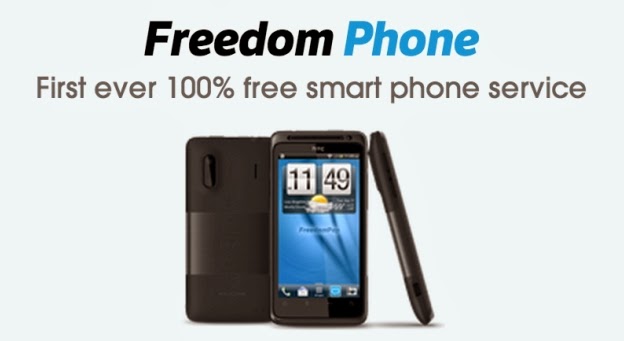
FreedomPop Now Allows Bring Your Own Phones


FreedomPop, a mobile cellular service initially backed by Skype founder Niklas Zennström, has been trying to make good on its slogan: “The Internet is a right, not a privilege” through a freemium business model. 

FreedomPop offers three tiers of phone plans.  The base level gives a customer 200 voice minutes 500 texts and 500 MB of data for $0.  FreedomPop’s e middle tier offers 500 voice minutes, unlimited texts and the 500 MB of data for $7.99.  If a FreedomPop consumer “splurged” to get unlimited voice, unlimited texts and 500 MB of data, it would only cost $10.99.  If a customer needs more, voice minutes are a penny a piece and 1 MB of data for 2.5 cents (or penny per MB for Premium Data subscribers)   FreedomPop does not officially support Hotspot for their handsets. FreedomPop customers are eligible more free services through social networking or participating in surveys et cetera. 

As a  a Mobile Virtual Network Operator (MVNO), FreedomPop does not have to maintain a network and does not entice customers with subsidized brand new handsets in exchange for an expensive iron-clad contract.   FreedomPop utilizes an Voice Over Internet (VOIP) voice and IP.  FreedomPop finds that around 45% of their customers purchase upgraded service. 

During the first ten weeks of FreedomPop Phones, it was offering refurbished HTC Evo 4G Design phones  for $99.  This was a decent price for a free phone service, but the price was not right for a cellular consumer who has a stack of superceded smart phones at his fingertips   But after network partner Sprint finally gave its blessing, FreedomPop can now accept Bring Your Own Devices (BYOD) for unlocked Sprint CDMA cell phones.  This allowed me to repurpose a legacy HTC Evo for a low cost (to no cost) second cell phone line.


Following their Freemium model, FreedomPop phones look to various approaches to monetize.  Much to FreedomPop’s credit, the company moved away from the $0.99 minimum usage charge which they initially attached to their Hotspots.  And data usage is frozen when there is less than 100 MB unless FreedomPop has permission to automatically top it off with a revolving charge.   FreedomPop does assess a $2.74 per month charge for voicemail, which can manually be excluded.  At sign up, customers are offered a complimentary 1 GB bonus, which later converts to a $9.99 a month charge. 

 If a customer took the premium 1 GB of data, the voice mail and unlimited talk and texting, the total bill would be $23.72.   On the one hand, FreedomPop’s $23.73 pricing is slightly more than the PayLo unlimited talk and text for feature phones but includes much more data.  On the other hand, Virgin Mobile offers unlimited texting, 300 voice minutes and unlimited data for $35.

Calls and texts are routed through a FreedomPop application on the smart phone.   Ths underlines that  savvy consumers should not look to MVNOs in isolation for answers about mobile connectivity.

There may be alternatives to the FreedomPop Voicemail.  Since  consumers are unable to port old cell phone numbers during FreedomPop Phone’s ongoing Beta testing period, a good idea is to link a G-mail Account with a new Google Voice number for messages.  Sidebar calling can be done with apps like Google Voice or Talkatone, so one can give the Google Voice number and call the person back using either service.  Google Voice can also move these voice messages into Google Chat.  Google Voice  not only records the message, it sends an email with a transcript (and will even translate it for you). If using this methodology, use the cell phone to authenticate Google Voice.  Necessity is the mother of invention for customizing cellular service for those willing to think outside of the box.

Granted that the sound quality for voice calls is typical of VOIP with a slight latency in signal and what can be characterized as car phone sound quality.  But these are small sacrifices for 200 free voice minutes. 

While FreedomPop cellular service  will have little appeal to “Digerati” who feel compelled to have the latest and greatest phones and think nothing of triple digit cell bills.  But there are some “old school” mobile phone users who are chary about monthly bills who would cotton to a one time charge for a smart phone and not needing to worry about charges for their “emergency” mobile device.  Those who would qualify for a federal Lifeline phone (a.k.a. Obamaphone) would get a much better deal with FreedomPop Phones, but the consumer would need to buy the older handset (which can be found inexpensively on E-Bay).  

As for myself, it is worth considering making FreedomPop a primary mobile carrier.  I use less than 300 voice minutes and 500 texts a month.  However there are times that I use more than 1 Gig of data and I would prefer to have a carrier which allows for Hotspot connections for a tablet. Hence, I will make FreedomPop a secondary phone.

22 November 2013

Surveying the Surfeit of Cheap Tablets


As Black Friday and Cyber Monday approaches, many merchants are highlighting inexpensive tablet computers as doorbusters or loss leaders to gin up overall Christmas holiday sales.  But before making impulse electronics purchases, it is wise to consider how you would use a tablet in mobile computing.  

It used to be that tablets were the ideal media consumption device. Tablets with 7" to 10" screens allow an individual to have an almost immersive view of videos.  Applications (a.k.a. apps) generally provided shortcuts which facilitated internet interactions.  Some tablets like the Nook and the Kindle were more e-ink reading devices which could have proto-tablet functions (checking e-mail, Wikipedia, and text based websites).  But Amazon’s Kindle Fire sought to be a loss leader which was a shopping portal doubling as an entertainment device.   Samsung’s strong showing with its Galaxy Tablets as well as the “phablet” Note series sought to tie tablets to cellular carriers.


Discern what are your mobile computing needs.  If you want a communications device with a larger screen (and you don’t mind carrying a 5.5" device in a pocket or a purse), then a “phablet” like the Samsung Note may be the best choice for you.  Many retailers will be offering enticing prices for such hybrid phone/tablets, but be prepared to be locked into a cellular carrier for a year or two.  If you want to keep having the latest and greatest devices, look into the early upgrade programs from major cellular carriers. 

Tablets sales used to be driven by Apple’s i-Pad, which came out in 2010.  The i-Pad still wins 29.6% of the tablet market while asking for a premium price that is rarely discounted.  While this writer is not purposely not part of the Apple cult, if one feels compelled to buy an Apple for its reputation of ease of use, enticing design or to keep up with the Jones’, then buy an i-Pad and sleep in on Black Friday.


As an electronics consumer, I like to get the most bang for my buck with tables and not be limited by a vertical monopoly manufacturer.   Currently I own a couple of Amazon Kindles and a WebOS HP Touchpad.  I love to read on an e-ink device like the Kindle.  Unfortunately, my Kindle 2 (with the slow but unrestricted 3G coverage) is losing its charge and computer geeks are reluctant to change out the battery.  While the Amazon Kindle Paperwhite provides even better e-ink resolution, the newer model has dropped the headphones option and the text-to-speech feature.  For my purposes. the text-to-speech ability is important for times which I want to enjoy books but can not have my eyes on the screen.  But text-to-speech is included in the Kindle Fires.

Regarding my HP Touchpad, I knew that it was a dead-end from the moment I acquired it in the HP fire-sale in the August 2011.  But WebOs is an elegant operating system and the HP Touchpad had upscale features.  Two years later, it is running fine and should be serviceable for the foreseeable future.  Alas, there are not many new WebOs applications available.  In order to use some hotspots, there are apps that are necessary and I am reluctant to make it a dual booting Android tablet.  So between an ailing e-reader and a red headed stepchild tablet, I have my eye out on the surfeit of cheap tablets.

 Some have tried to take advantage of the slow demise of the Barnes and Noble Nook by using the SD card as an Android boot.  It can work, but realize that the Nooks OS takes up nearly 3/4ths of an 8 GB e-reader.  The 16 GB Nook HD tablets (list $150) offer more storage.  But there are serious questions to the long term viability of the Nook.  So it may only be good for reconfigured use or as a stuck in time tablet. 


Having owned several Kindles over the past four years, I am entrenched in Amazon’s e-reader market.  The Amazon Kindle Fire HD has achieved around 5% market share, but it should suffice for my own  supplemental tablet/ infotainment needs.  Although a 16 GB Kindle Fire HD (list  now $169) has a 7" screen is markedly smaller than the 9.7" HP Touchpad screen, it is a more manageable size for e-reading functions.  Moreover, my mobile computing needs have not been as video oriented.  The Kindle Fire HD has Bluetooth, which should allow a wireless keyboard for productivity.  The Kindle Fire HD  does allow for hotspot connection hence  buying a 4G version is costly and unnecessary.  

For those interested in getting Black Friday bargains for the Amazon Fire, be aware that the discounts will be for the Fire HD (2nd generation) not the newer Fire HDX.


If one can live without using a tablet as a camera or a phone or having the “Mayday” feature, the HD will have most of the improvements of Kindle Fire OS 3.0 “Mojito “ (a forked version of Android).   Many of the cut rate Kindle Fires are 8 GB (which should leave around 6 GB for internal storage along with the cloud).


While most mobile computing people look to tablets as a media consumption device, some industrious individuals want to have a tablet that is a  quasi laptop without the bulk or balking at the price of a MacBook Air (list $999).  When Microsoft entered the tablet market, it tried to appeal to such customers with the Microsoft Surface RT.  The price point of the Microsoft  Surface 2  (list $449) rivals that of the i-Pad (list $499), but Microsoft throws in fully functioning version of Office and 200 GB of SkyDrive storage and plenty of cloud storage, features which generally cost extra elsewhere.


The 10.6" touch screen of the Microsoft Surface makes full use of Metro interface, but if one wishes to run old programs, it is necessary to buy a Microsoft Surface Pro (list $899), which is much pricier.   The big tiles on the start screen are customizable and offer updated embedded information.  The Surface RT allows multitasking.  

The body of the Microsoft Surface RT includes a built in kick stand.  The Surface RT has micro SDSX ports allowing users to add memory.  The magnetic Touch Cover is ordinarily a $100 add on which both protects the screen and is a keyboard.  While the Windows Apps store is not as robust as the Android or i-store, they claim that plenty of apps are free. 

If you have Surface appeal, it is possible to find a Surface RT for under $200 during Black Friday sales, but it would be wise to look for sales which a buyer tne pays a little more and includes the Touch Cover. 

There will be plenty of Black Friday sales on Android tablets.   If Android tablets have an appeal, determine which version of OS the hardware has, as earlier versions of Android  (prior to 4.0“Jelly Bean”) are not optimized to tablet proportions. Also be aware of how much storage is on the tablet.  A $40 tablet that only boasts 4GB will barely hold one movie.  That might be good enough for kinderspiel but would quickly be condemned to the land of misfit toys for most other tablet users. 

This holiday shopping season it may be easy to acquire a tablet but take the time to choose the right tablet for you. Consumers who are content to pay premium prices for an entertainment consumption device which is touted to work out of the box should opt for an i-Pad. Busy businessmen may want the Microsoft Surface to be able to do Office work while surfing the web on their tablets.  Those who want an all in one mobile communications device should consider a “phablet” like the Samsung Galaxy Note.  Avid readers who want the functionality of a tablet should lean towards the Amazon Kindle Fire.  And there are a variety of inexpensive Android tablets which may motivate impulse shoppers.

h/t: BFAds

08 November 2013

Book Review: The War on Football: Saving America's Sport by Daniel J. Flynn


Daniel J. Flynn
So many of those who write about sports come from a liberal persuasion.  So it was refreshing to read Daniel J. Flynn’s book "The War on Football: Saving America’s Game” (Regnery Publishing, 2013, 216 pages) as he iconoclastically uses science, history and social relations to defend a beleaguered sport.  Perhaps Flynn’s tenure as the former Executive Director of Accuracy in Academia inspired the author to include over 50 pages of footnotes to score his points, lest anyone doubt him. Flynn surveys the sport on the Pop Warner level, collegiate football programs even womens’ football leagues as well as the pros to try to discern the truth about football.

When listening to the news today, it is hard to escape hearing ancillary reports on the War on Football.  Between the news that former Dallas Cowboy running back Tony Dorsett declaring that hits from his NFL career contributed to his diagnosis of CTE (Chronic Traumatic Encephalopathy).  Then there are the charges of hazing by Miami Dolphin Guard Richie Incognito that he bullied other 300 pound rookie players.  Then there is the irate Texas parent who pressed administrative charges of bullying against Alendo High School Football Coach Tim Buchanan after winning the game 91-0.

The battle against football is not simply for safety but it mirrors a “wussification” of society as well as reflecting the lessons which we want to teach our children. So instead of giving football a proverbial pat on the back for instilling discipline, teamwork and the virtues of hard work, football is given a kick below the belt by pointing to questionable science to win their game.


There is no doubt that football is a physically demanding sport, which requires conditioning and practice.  However, the mainstream media weltanschauung is colored by a perception that football is an American version of a gladiator sport.  While there were periods in history, such as 1905 and 1968, where many mortal injuries on the playing field occurred, Flynn contends that rule changes and better equipment mitigate those serious casualties.  So today anti-football fanatics concentrate on concussions. 


The $765 million settlement by the NFL to former players since 2006 with brain damage claims as well as suicides of Junior Seau and Dave Duereson which supposedly implicates CTE to the tragic deaths contributes to the public perception that football is an unsafe sport.


 Flynn’s "The War on Football" book debunks these simple conclusions as they are not bourne out by the facts.    Cheerleaders are more at risk for concussions than football players, but which athlete embodies the fearsome warrior traits so disfavored by Cocktail Party elites?  

Scientists can not find a causal effect between football and CTE.  However hucksters selling safety are able to profit hawking equipment with dubious extra protection.  Moreover, Flynn casts a shadow upon Mark Lovell’s Intermediate Post-Concussion Assessment and Cognitive Testing (ImPACT), noting how the expert lacks scientific detachment as he successfully  markets his “low to moderate reliability” product to sports programs desperate for cover against litigation.

The pro-football settlement regarding concussions may have a ripple effect which could well diminish the lower levels of the sport.  Some anti-football crusaders want to ban the sport to minors.  This nanny state protection for the children , which would effectively kill football as the physicality of the sport make football a young person’s sport.  In addition, the skills required for teamwork, precision and strategy takes time to develop to attain the athletic achievements that American football fans admire.  


As a casual football fan who loves history, I appreciated learning how football evolved as a uniquely American sport.  It was amusing to find out that Notre Dame greats George Gipp and Knute Rockne superceded their “tramp athlete origins” to become paragons of football.  In addition,  Pop Warner had his own foibles but still left a great legacy to football.   Flynn’s iconoclastic arguments against the junk science concerning concussions and football were compelling and often ignored by a sensationalist, liberal leaning mainstream media. 


The tone of the book was fair but decidedly not objective.  I appreciated the cynical asides peppered throughout the book questioning junk science or the tongue in cheek critique on litigators: “They don’t teach physics in law school.”    Flynn had so won me over that I was rooting for a blowout at the end instead of the more restrained conclusion that: “Football is good for you.  Play. Watch. Cheer.”


h/t: EdDriscoll.com 

28 October 2013

Book Review: 40 Days for Life by David Bereit and Shawn Carney


40 Days for Life: Discover What God Has Done…Imagine What You Can Do (Capella Books 2013, 269 pages) is a book which chronicles the trials and tribulations for the 40 Days for Life  campaign as prayer vigil against abortion from its genesis around a wooden table in College Station Texas in 2004 to its spread world-wide.  The book is co-authored by David Bereit, a pharmaceutical rep who left comfortable career to follow the call of the Holy Spirit to do His will in uncertain circumstances.  The other narrative voice is Shawn Carney, a young Texan who inherits the College Station leadership after Bereit answered the call to work for other Pro-Life organizations in Washington, DC. Carney became the Campaign Director for 40 Days for Life, while  Bereit later returned  to lead the National 40 Days for Life campaign.

[L] David Bereit [R] Shawn Carney of 40 Days for Life 

The 40 Days for Life idea was modeled after several key scriptural moments, like the flood which necessitated Noah's Ark and Jesus' Prayers in the Desert before beginning His Earthly public ministry.  Similarly, the book followed a structured course.  Each chapter is one of forty vignettes, followed by concurrent scriptural  passage concluded with a prayer.  Presumably, this book was intended to be read over forty days.   Perhaps it had a different impact in short, reflective increments rather than reading the contents in several sittings.

The power of the faith of Bereit, Carney and of many prayer warriors who participated in the 40 Days for Life is palpable. The book does not sugar coat the hardship and anxiety of starting up the campaign.  But their testimony shows how the Lord provides.  40 Days for Life also recounts some of the acerbic resistence which Pro-Lifer's were met with in witnessing the call of their conscience by publicly praying against abortion.

Several of the stories are quite striking and seemed pulled from current headlines.  The Grand Rapids Michigan story of 72 Ransom Street NE which building that had seen both heaven and hell.  The building started as a synogogue in the late 19th Century, only to become a Greek Orthodox Church in 1949 and in 1994 the vacated  building was turned into Western Michigan's largest abortion clinic.  However after many prayers and fundraising, LIFE International (an Evangelical Christian ministry) against abortion took over the building in 2004 and made it their headquarters. 

The details of the unhygenic conditions, the crusted blood on the linoleum floor and rusted abortion instruments at 72 Ransom Street called to mind the horrific details from the recent trial and conviction of late term abortionist Kermit Gosnell in Philadelphia. The appalling conditions are not isolated incidents in abortion mills, but pro abortion advocates get apoplectic if anything id deemed to impede the so called "right to choose" or more clinically "womens' reproductive health".

An interesting aspect of 40 Days for Life is showing how the impetus for 40 Days for Life has spread worldwide.  The book tells of campaigns in Canada, the United Kingdom, Australia and the  Georgia Republic . Defending life and forming consciences is not easy, especially in countries like Tblisi, Georgia where the average woman has 3.1 abortions and most occur after marriage.


The years of globe-trotting by Bereit and Carney to prayerfully support unborn children allowed for some serendipitious experiences. Shawn seemed to have quite a knack for unexpectedly rubbing elbows with his opponents. 

 On the first day that Carney went to pray at an abortion clinic, he befriended new on her first day working for Planned Parenthood in Bryant, Texas.  Nearly a decade later, Abby Johnson had risen to be the Director of that Planned Parenthood facility, but Ms. Johnson sought out Carney after witnessing a 13 week fetus writhe in pain during an ultrasound guided abortion.  


[L] Abby Johnson [R] Shawn Carney


Dr. Leroy Cahart, MD
On a flight to Washington, DC, Carney found himself seated next to the notorious late termabortionist Dr. Leroy Cahart, MD. Carney had conducted a prayer vigil near Carhart's Nebraska facility the day before.  Rather than confront the abortionist, Carney charitably chose to pray for Carhart.  The Spirit left him with a sense of joy that he could return to his family whereas the abortionist was obliged to return to his abortion practice.


The book was mostly conversational in tone, reading almost like an oral history that was culled  by their collaborative writer Cindy Lambert.  However, a couple of entries  started with ambitious introductions but the transitions to their stories seemed forced and rough. For example, David citing the Martin Luther King assassination as an introduction to Devanie's story based in Memphis.  Or  Shawn's "Deep in the Heart of Texas" prelude which strained to link the case of Jane Roe (Norma Leah McCorvey) with  an unrelated contemporary abortion facility in Houston, Texas.

Two chapters of 40 Days for Life had narratives from other pro-life activitists.  The testimony which Milwaukee's Dan Miller was flowing, first hand and illustrative.  But including the entirety of a 2 1/2 page e-mail on "The Rest of the Story" which twice apologized for the length of the missive begged for consolidation.


While Shawn's role  as Campaign Director for 40 Days for Life certaily required his extensive travel to show support various far-flung campaigns, detailing those logistics was sometimes detrimental to the heart of the story.  It made sense to share such facts to augment the tales of hardship which tested him as the 40 Days for Life campaigns started off.  Of course, the Cahart story deserved some travelogue background.  But for me, it was off-putting and unnecessary to mention the hardship of flying two cross country red eye flights to be in Los Angeles to celebrate the closing of an abortion facility.

40 Days for Life would be a welcomed bedside daily devotional for prayer warriors committed to the Pro-Life cause.  It gives great examples of the power of prayer to overcome seemingly insurmountable odds to defend life.  The book gives many perspectives on how abortion affects the unborn child, the often grieving abortive mother, the father, the extended family and the community.  If only people spouting pro-choice propaganda would choose to  the time to read 40 Days for Life, one wonders how many hearts of stone would turn to flesh.

When this review was composed, the Kindle price of 40 Days for Life was lowered to $2.99.  At that price, the book is well worth the read.

16 October 2013

Why Don’t People Answer the Call to Cellular Phone Savings?


One of the costly monthly expenses for most households in America is their cellular phone bill.  The CTIA Wireless Association estimates that average cell phone bill was $47 in 2012 but many individuals pay double that amount.  The CTIA figures do not factor in the costs of handsets or choices for “reasonable” plans

Smart phone consumers comprise 46% of the market (including 66% of youths aged 21-30).    The CTIA figures do not factor in the costs of handsets or choices for “reasonable” plans.  So there may be a low cost plan, but if one is required to carry a data package, monthly costs precipitously increase.

Another reality is that the most of the major American cellular carriers push subsidized phones with strict two year agreements.  Few cellular consumers consider the overall costs incurred with such a subsidized cell phone contract.  Such customers are  are more concerned about getting what they perceive is the latest and greatest handset for a couple of hundred dollars down (usually 1/3rd of the actual cost) while paying a significantly higher amount in the monthly cellular bill then they might pay otherwise.  

Tero Kuittinen, an independent market analyst from Alekstra, notes: "That psychology has worked for hundreds of years, and it’s still working.”   Another factor to consider is the attachment that many people feel toward their cellular purchases.  AT and T retained gripping customers for years because it retained a monopoly on i-Phones, which had a less generous plan and cost more than other smartphones, but those in the Apple cult craved it.  It seems akin to the mentality which drives new car purchases that customers will overspend to get that “new car smell” for a durable that loses 20% immediately after purchase. 

T-Mobile took the lead among cell providers in weaning prospective customers from the subsidized cell phone model with their Simple Choice plan.  But an  alternate model which T-Mobile innovated but had more success in competitors emulating is the “Next, Edge, Jump” and “OneUp”.  These programs which are essentially cell phone installment payment plans.  Consumers lease a phone by paying a bit extra ($10-20 a month plus up to $10 for the privilege) for 20 to 24 months  but with the ability  to upgrade in six months to a year.  But if consumers do not “jump”, then they will pay significantly more as there is no subsidy underwriting the purchase. This sort of gimmick may have some appeal to digerati would constantly want to upgrade without being locked in a contract, even though they are effectively locked in a contract.

Alas, cell phone services are not fungible.  Aside from the handset cost, choice of carriers are impacted by coverage.  An inexpensive plan is worthless if one does not get range in one’s preferred calling area.  Verizon Wireless has the best coverage but people pay a premium for the extensive coverage.  But most customers may not need such extensive range.

Cost conscious consumers should know that they can cut their cellular costs in half (or more), by using Mobile Virtual Network Operators (MVNOs), pre-paid cell plans and fremium cell providers like FreedomPop. But the reality is that according to Ovum, only 23% of cellular customer have opted for such frugal mobile phone service. 

 As MNVOs and the ilk do not have the deep pockets for advertising, they have a dubious reputation.  In fact, when breaking up with Sprint to switch to one of its MVNOs Virgin Mobile to save half on cell costs, the customer service representative thought that it was a compelling argument to sneer “Well, that’s a pre-paid phone”.   As a customer who had been off his contract for over a year and did not need another handset, that was a less than convincing ploy. 

Usually, second tier cellular carriers offer less current handsets.  Even though these cell phones may only have been on the market for six months, finicky consumers turn their noses at these out of data handsets.  Sometimes, upgrades are prudent, such as switching from a 3G phone to one that also gets faster 4G or LTE coverage.  But when a new release is buggy, or simply has minor cosmetic changes, a savvy consumer should question whether the latest is really the greatest. Of course, with Apple i-phones, a consumer can not replace the rechargable battery himself, so it may only be good for around 18 months before starts to need replacement.

Personally, I have always considered the cellular phone plan to be more important than the particular handset.  In addition, I tend to baby my cell phone, so it has less wear and tear on the unit. But my experience switching cellular carriers from a Sprint HTC Evo with a 4.3" capacitive screen to a Virgini Mobile Samsung Victory (Galaxy II) with a 4.0" but with 4G LTE has demonstrated that the slight difference in display size impacts inputting on a virtual QWERTY.  

What may drive my decision to switch cellular companies again is whether FreedomPop allows for Bring Your Own Devices with their Freemium model roll out.  I would not buy one of FreedomPop’s outdated and refurbished HTC Evo Designs for $99 (or later $149), but I would happily switch to FreedomPop to get 200 voice minutes, 500 texts and 500 MB of data for free.  FreedomPop is relying on consumers to add on to their free base.  I might get unlimited calls and texts with a half Gig of data for $10.99.  But since FreedomPop will allow for tethering (hotspots) and they charge $10 per Gig of data, my old HTC Evo might be a supplemental hotspot for months that I need it. 

In another phase of its Un-carrier campaign, T-Mobile tried to  wreck the international roaming racket. T-Mobile stopped charging more for international text for Simple Choice customers when sending to 100+ countries.  Calls to Simple Global countries aside from the US are at $0.20 a minute.  Most importantly, there is no outrageous international data roaming charges at standard speeds.   However  there are some caveats to this International Roaming largesse.

Alas, T-Mobile considers 2G (or 128 kbs) to be an ideal speed for e-mail, social media, web pages and navigation but it such speeds would be painfully slow for graphic intensive applications.  So T-Mobile also offers three speed boost plans for international travelers.  One day of higher data speed (100 MB) for $15, one week (200 MB) for $25 and two weeks (500 MB) for $50.  This would be good for international travelers keeping in touch at home but operating on a guarded basis .  Since T-Mobile allows BYOD for GSM phones, it might pay for a traveler not taking a quick jaunt overseas to pick up an old unlocked GSM phone and sticking with T-Mobile.  Or they could just use that unlocked GSM phone with local SIM cards.  

As America enters harder economic times, more consumers may try to beat the high cost of living by answering the call to cheaper cellular services.

h/t: The Joy of Tech