Showing posts with label Barack Obama. Show all posts

09 July 2018

Considering SCOTUS Selection Strategies


Associate Justice Anthony Kennedy's retirement at the end of the 2017/18 Supreme Court term affords President Trump another opportunity to fill a seat on the Nation's High Court.   After the Borking of President Reagan's first choice in 1987, the confirmation process is no longer a gentile process of Senate vetting whether the President's choice is qualified.  While the vacancy is still up in the air, it is a fun political junkie parlor game to consider the strategies the President Trump may employee to make the nomination. Major factors include: timing; traits; temperament

I.  Timing

Firstly, there is a question of timing.  Democrats have been braying that there should be no confirmations until after the midterm elections.  They point to how President Obama was denied an opportunity to replace the Scalia vacancy with Merritt Garland as Republicans refused to confirm just before an election.  Of course, their objections are ahistorical, as Kagan was confirmed thee months before midterm elections.  But when do fact matter to partisans who talk out of both sides of their mouths to gain advantage?  The difference in 2016 is that Republicans were in the majority and set the agenda.

Some partisans focused on the political horse race postulate that it might make sense to hold the confirmation until after the midterms to have Trump supporters Get Out The Vote (GOTV).  Such a strategy is needless and short sighted.   While our elected officials do not work in a vacuum so they need to be mindful of elections, the decision should not be primarily driven by political advantage. However, the deferral of confirmation in 2016 was a prudential decision by Senate Majority Leader Mitch McConnell (R-KY) to let voters decide. This move respected a 73 year old tradition for about Supreme Court openings in the last year of a Presidential term.

If one looks through a partisan lens, it makes little sense to stall the confirmation until after the midterms. Republicans have a majority in the Senate.  Thanks to ex Democrat Majority Leader Harry Reid (D-NV) blowing up comity in the Senate by exercising the Nuclear Option in 2013 and Democrat Majority Leader Chuck Schumer (D-NY) leading a Supreme Court confirmation filibuster in 2017, cloture votes are obviated and a only a majority vote is required.   While Senate Democrats have a hard midterm election cycle, one never knows what the future holds, so it would be better to try to get it done sooner rather than later.

Summers in the District of Calamity are often the silly season as political news is either trivial or outrageous, but typically few people pay attention as they are on vacation. Democrats are intent on fighting any Supreme Court nominee from President Trump tooth and nail, so the expected vitriol and direct action will not have as much resonance as it would be if it became a campaign issue.

If President Trump did not have a booming economy or positive news from foreign relations, it might make sense to make a SCOTUS nomination a campaign issue.  But George Barna pointed out through polling of evangelicals about the 2016 election, the two issues which that 11% segment of the population cared most about was the Supreme Court and pro-life positions.  Evangelical turned out 98% in 2016 and 96% voted for Trump, so there is little reason to gin up that base over a Supreme Court nomination.

It seems pretty clear that the nomination of Trump's second Supreme Court choice will be sooner rather than later.  During the 2016 Presidential election campaign, Mr. Trump had circulated a list of twenty five jurists who would be considered.  This list was augmented with five names after his inauguration which included now Justice Neil Gorsuch.

The White House indicated that it will announce the President's choice before he flies to Europe on July 10th. In fact, two days after Kennedy announced his retirement, President Trump announced that he had winnowed the frontrunners to five, including two women and set the selection announcement on July 9th.  So we will not play this Between the Beltways parlor game for long.

Moreover Majority Leader McConnell proclaimed that there will be a vote for confirmation by October.  This is in keeping with Senate Judiciary Chair Charles Grassley's (R-IA) timeline that from nomination to confirmation vote, the Senate could do its work in 78 days.

II. Traits

A Supreme Court nomination is one of the marquis decisions during a President's time in the Oval Office. The pick stays on the High Court long after the Chief Executive leaves the White House.  The fact that it is Justice Kennedy's replacement is even more significant.  Even though Kennedy was appointed by President Ronald Reagan in 1987, he has been a swing vote in his 31 years on the Supreme Court.  So Mr. Trump's choice will significantly impact the balance of power on the High Court.

At a campaign rally in Minnesota, President Trump mused that his choice could be on the bench for forty years.   Many of the jurists on the list are in their 40s and 50s so it seems that prospective longevity on the Supreme Court is an important attribute.

Does race or gender matter?  Perhaps.  Other Presidents have tried to make their mark by appointing "the first" identity group (e.g. Johnson with the first black of Thurgood Marshall in 1967, Reagan with the first woman Sandra Day O'Connor in 1982, Obama with the first Hispanic with Sonya Sotomayor in 2009). 

Trump is not likely to bow to political correctness or play identity politics.  Still, with 40% of Trump's short list being comprised with women, selecting a female could put vulnerable Democrats in a difficult position.  Prominent Democrats (and their media allies) have been strident in seeking to savage any pick made by President Trump.  There are already ten Senate Democrat incumbents in states where President Trump won in 2016 who have tough re-election races.  If these vulnerable Democrats are associated with an unjust evisceration of a female Supreme Court nominee, this may play very poorly for them during the midterms with key groups (suburban Moms, traditional Democrats, Independents).

Because of the timing of the selection, President Trump may want to ensure that the background vetting of a prospective nominee is speedy.  That might give an advantage to candidates who have recently been confirmed, as they have fresh FBI full field background investigations. So when speculation draws to a fevered pitch, consider who has been recently appointed to the federal bench.

III. Temperament


Despite contradictory indications during the 2016 primary campaign, President Trump has proven to be a Pro-Life President.  Yet he maintained that he will not ask about abortion when he interviews his short list.  This is hardly surprising because a good Supreme Court candidate will wisely deflect such a probing question, pointing to not answering hypothetical questions or not tipping one's hand on pending matters.  As the left has made abortion rights a keystone issue, much of the pre-nomination hysteria revolves around the potential overruling of Roe v. Wade (1973).  Any prospective candidate for the nation's High Court needs to be prepared for hard questions from the Senate Minority.

This points to a couple of qualities which Supreme Court nominees need to possess at least through confirmation.  A SCOTUS choice must be prepared.  Harriet Miers was a failed choice of President George W. Bush, in part, because she was not impressive in constitutional chit chat with Senate Majority members when making courtesy calls.

To present well in the Senate Judiciary Committee, successful candidates must master "Murder Boards",  that is the harsh mock interviews preparing for the hard questions.  Once they are on the bench, Supreme Court members deliberate in private.  But before confirmation, they must skillfully parry with hostile questions, which generally do not tip the hand of a prospective justice yet sufficiently satisfy the interlocutor. 

For a contentious candidate, mouthing the mantra "I can't comment on a prospective matter" or "Courts adjudicate real cases and I do not comment on hypotheticals" will not suffice.  As Roe v. Wade will mostly likely be touchstone for skeptical questioning, whoever is nominated must be well prepped to answer questions about "the right to privacy" and the primacy precedence (a.k.a. stare decisis).

When John Roberts went through his confirmation hearings, he did not totally deflect about questions of precedence, noting that there are some instances of bad precedence that should be upheld (like "Separate but Equal" Plessey v. Ferguson in 1896 which was overturned in 1954 by Brown v. Board of Education).


Nominees also must be mindful how simple questions can be abused by opponents to their confirmation.  When Judge Bork was asked why he looked forward to being on the High Court, and Bork answered that it would be an intellectual feast.  That answer was twisted to portray Bork as being an elite intellectual who was only in the position for himself.  Combined with vilification of Bork's record by liberal Senators, chiefly Ted Kennedy (D-MA), the nomination was defeated. 


While Supreme Court candidates should be sufficiently deferential to tough questioning, sometimes they can successfully fight back.  The left tried to "Bork" Clarence Thomas in 1991 with allegations about a subordinate employee Anita Hill.  Thomas famously refuted his treatment as a "high tech lynching of an uppity negro."  Despite that contentious quip, Thomas was narrowly confirmed.

As for judicial temperament, President Trump's list of 30 prospective selections, prima facia most would be deemed conservatives.  But their legal logic is not necessarily uniform.  Justice Thomas's jurisprudence rests on "natural law", whereas Justice Gorsuch is a textualist who looks to the letter of the law  which defers to the will of the legislature (even if they pass stupid laws).  Then there is originalism, which sees things through the prism of an understanding of the Constitution when it was originally ratified. 

A judicial trait which seems to be in favor with President Trump is the notion of judicial humility.  


Former Judge Andrew Napolitano characterizes this jurisprudence to interpret the law and apply the Constitution to the laws Congress has written. Judicial humility has not been the prevailing model of Supreme Court activism over the last sixty years, with the High Court legislating from the bench by inventing rights (e.g. "The Right to Privacy") or rewriting law to rule it constitutional (e.g. "Obamacare").

Since the Kennedy retirement has been announced, there has been rampant speculation about Mr. Trump's picks.  Even though the President has interviewed seven prospective SCOTUS picks, it has been generally considered that the list has been narrowed to four candidates.  Some even say that there are just two front runners.  Senator Orrin Hatch stirred up the rumor mill when he stated in an Op/Ed that he will fight for Mr. Trump's pick.  But some wonder if he had insider information, as Hatch's release  opined


"But no matter the nominee's background or credentials, progressives will do everything they can to paint her as a closet partisan, if not an outright extremist."

This could well be a MacGuffin to throw off all speculation, a ghostwriter using inclusive language or a retiring Senator tipping the hand. If Hatch was not just being deceptive or politically correct, there is only one female on the short list of choices, Judge  Amy Coney Barrett, who made headlines when Senator Diane Feinstein rebuked her by saying: "The [Catholic] dogma lives loudly within her" during her September 2017 confirmation hearings.   If President Trump is raring for a fight, picking Barrett could paint Democrats as being bigoted towards Catholics, and hint that Roe v. Wade might not stand.  But considering the vitriol which Democrats have been displaying and the importance that they place on abortion rights, this may also be a dangerous donnybrook.

One thing can be said with certainty -- the Simpsons were being satirical rather than sagacious with their rending of a Trumpian Supreme Court pick.


Ivanka will not be sporting a black robe (in public) anytime soon. 


08 May 2018

Book Review: The Great Revolt by Salena Zito and Brad Todd


After Richard Nixon won the 1972 Presidential election in a 49 state landslide, New Yorker film critic was flummoxed at how this could happen as none of her Manhattanite friends would vote for him.  This possibly apocryphal episode illustrated how seaboard elites can be so out of touch with Middle America (sometimes flippantly labeled as  “Fly Over Country”).

A similar cognitive dissonance has occurred at the election of President Donald Trump in 2016. Heading into election night, the 538 blog polling guru Nate Silver predicted that Hillary Clinton had a 72% chance of winning.  Yet when election results were confirmed at 2:30 AM November 9th, Donald J. Trump gave a victory speech.  While Mr. Trump won a huge 304 to 227 (with five disloyal electors), the margins of victory in five Rust Belt states were close.  Had 56,000 voters not voted for Mr. Trump, then Bill Clinton would have returned to the White House as First Gentleman (sic).


To delve into how Donald Trump was able to confound conventional wisdom and assembled a new coalition which led him to the White House, Salena Zito and Brad Todd wrote “The Great Revolt: Inside the Populist Coalition Reshaping American Politics” (2018 Crown Forum 309 pages).  Salena Zito is a reporter from Pittsburgh but made made her mark during the campaign for the New York Post by traveling to these Midwest battleground states and interviewing prospective Trump voters to understand their attraction and enthusiasm for this first time populist candidate. 


These oral histories are backed up by data from Brad Todd’s On Message Inc. polling unit. The metrics were particularly instructive in seeming how sentiments shifted in swing counties between 2008 and 2016.


The Great Revolt featured 21 interviews with voters from two key counties in Pennsylvania, Ohio, Michigan, Wisconsin and Iowa. These interviews felt like an extended coffee talk at a diner with a trusted confidant.  The Great Revolt broke down these voters into seven archetypes: 1) Red Blooded and Blue Collar 2) Perotistas 3) Rough Rebounders 4) Girl Gun Power 5) Rotary Reliables 6) King Cyrus Christians 7) Silent Suburban Moms.  While they all chose to support Trump, their pathways were not straight and narrow and deserve careful consideration. 

Over the past several elections, Democrats seemed to abandon salt of the earth blue collar erstwhile Democrats to favor demographically up and coming minority majorities and those new voters who might be culled from immigration.  During the 2008 Democrat primaries, candidate Barack Obama derisively referred to rural Rust Belt voters as “bitter clingers to their guns and their Bibles”.  Ironically, Ms. Clinton was trying to win their support for her first failed presidential run.   

Yet in 2016, these same segment of voters were ignored by the Hillary! campaign as she declared that half of Trump supporters were a “Basket of Deplorables” which might serve as a caricature of this segment of voters which would be more sympathetically described as The Forgotten Man.  

Hillary Clinton chose to ignore Wisconsin during the 2016 General Election campaign and made only a couple of trips to large population centers in Michigan, figuring that she had those votes already in the bag.  Donald Trump campaigned hard in Rust Belt states in rural precincts and scraped together enough support to win the Wolverine State by about 8,000 votes (0.23%) and the Badger State by about 22,000 votes (0.77%).  

Pundits have pontificated that Republicans face a demographic problem whereas Democrats have a geographic problem, as they continue to lose support in vast swaths of middle America.  In 2016, Mrs. Clinton only won 526 counties compared to the over 1500 counties that her husband President Clinton won in 1992.  What became obvious after election night 2016, racking up large victories in the popular vote does not necessarily win the White House.  Both parties would learn from contemplating the shared psyches of these Trump voters  if The Great Revolt was a one time populist phenomenon, if it can transfer unto other populist politicians and if it can be sustained after 2016.

A couple of these Great Revolt subgroups, such as Rotary Reliables and NRA inspired Girl Gun Power types  are likely to continue to actively oppose progressive politics as it directly impacts their intrinsic interests.   It is more dubious for other groups.  In 2016, evangelical voters made a pragmatic decision to back Mr. Trump, who has a messy personal life and whose blithe brashness is an antithetical attitude, because they were concerned about the Supreme Court and pushing back against abortion.  The outlook for Perotistas is unclear as their support seemed personality driven and may not be transferrable.  The three women interviewed as Perotistas were superannuated, so one can surmise that their support will age out.

As much as the iconoclastic mainstream billionaire turned celebrity politician appealed to some segments of The Great Revolt voters, what became quite clear is how his opponent and the nature of the race also impacted the election.  In some of the vignettes, the anti-Hillary! sentiment jumped off the page. 

 Many of the interviewees came from union families or those who served in the military would have been quite at ease in John F. Kennedy’s Democrat Party but who are red headed stepchildren in today’s Democrat Party.  That being said, they probably would not have participated in politics or been motivated to vote GOP had Donald Trump not reached out and appealed to their sensibilities.   They may not always agree with Mr. Trump and may recoil at some of his Tweets or stances but as Salena Zito nailed during the campaign, they know to take Trump seriously but not always literally (unlike the anti-Trump pack press).

Most of the coalition in The Great Revolt worried about their economic security and loss of their rural way of life, it did not seem like there was strong linkage to “Build the Wall” or immigration.  While one union activist was strongly against NAFTA, much of the blue collar sentiments revolved around being forgotten by their erstwhile allies, the Democrats.   

While the interviews in The Great Revolt were vivid, it would have been desirable if there was a bit more uniformity when describing the interlocutors.  Not all of the portraits had demographic details or made it easy to discern the interviewees profession.  There also seemed to be a disconnect between the prefatory analysis with the dialogues of the Trump voters.  The authors rightly proposed that Mr. Trump’s social media instincts allowed him to circumvent curating by the mainstream media and directly reach his coalitions.  Yet many of the interviewees contained in The Great Revolt wished that President Trump would tweet less. 

That being said, surely Salena Zito and Brad Todd appreciated President Trump’s pre-publication post which extolled the virtues of The Great Revolt.


The case histories in The Great Revolt offer insightful context for the unexpected coalition which elected Donald Trump to the White House in 2016.  But the archetypes portrayed in The Great Revolt may point to traits that could appear in other voter segments.   Democrats have opted to appeal to progressive identity politics and rely on the brown wave of new voters in lieu of  “The Forgotten Man” (rural, blue collar, union white males).   A flaw with that strategy is that it relies upon banked voters, which since 1964 have been the bulk of black voters.  The Great Revolt chronicles how slim segments of voters who feel neglected and come to the epiphany that their traditional party no longer represents their values can impact an election.

Recently, Kanye West said some favorable things towards President Trump. Perhaps that was a publicity stunt or an African American celebrity "talking out of turn" as Rep Maxine Waters (D-CA 43rd) claimed. But afterwards polling showed a doubling of his support among African Americans.  Mr. Trump has been making explicit appeals for those voters.  


It is conceivable that an upsurge in black labor participation and showing up to make the case may shift some attitudes, or mollify some of the bile against him. Conservative Black video bloggers Diamond and Silk have shown that elements of the Trump Administration agenda may have some appeal to fed up African American voters.  Black represent about 13% of voters and in recent elections have voted about 95% for Democrats.  If there is a 5% shift in that segment of reliable votes, Democrats’ election strategy may be in trouble. 

30 January 2017

On Blue Dogs and Beltway Democrats Being on the Endangered Species List

Progressive Purity Tests May Keep Democrats in the Political Wilderness by Banning Blue Dogs


The Blue Dog Coalition was formed in 1995 in reaction to devastating losses in President Clinton's first mid-term election.  The moniker played off of the expression "Yellow Dog Democrats" of the South who were so loyal to the party after the Civil War.   Blue Dogs could also refer to the idea that when dogs are not let in the house, they stay outside in the cold and turn blue.   


The Blue Dogs sought to find a compromise between conservative and liberal positions.  They tended to be Democrats who were from rural districts who were pro-guns, pro-life and fiscal hawks. Blue Dogs were successful in 1996 and then Democrat National Committee Chairman Rahm Emmanuel used Blue Dogs to retake the House in 2006. 

However, in the same 2006 election cycle, progressive began to retake the Democrat Party.  A Progressive candidate beat Senator Joe Lieberman (D-CN) in the Democrat primary, forcing the veteran lawmaker (who was quite an orthodox liberal except on staunch support for Israel and being a war hawk) to successfully run as an "Independent Democrat" in the general election. But this bode as a bad omen for Blue Dog Democrats.

At their  high water mark, Blue Dog Democrats had 44 members, which was roughly 20% of the Democrat Caucus.  But progressive tides and internecine battles have lowered Blue Dogs ranks to 17 members which again puts them out in the cold. 


At the beginning of the 115th Congress, Representative Tim Ryan (D-OH 13th formerly 17th) sought to run for House Minority Leader against the incumbent Representative Nancy Pelosi (D-12th formerly 5th & 8th).  The final vote was for unseating Pelosi  not even close 134-63.  

Considering the way that close to 70 Democrats (all from safe Democrat districts) boycotted President Trump's inaugural festivities shows that Congressional Democrats seem dedicated to the progressive cause, under the delusion that they will retake the House in the 2018 elections.  

The Democrats continue to be obsessed with gun control, abortion rights, liberal immigration and an ever expanding government.Thus it seems that Democrats continue to count on winning urban voters along with educated white collar suburban voters in their path to victory.  This sort strategy leaves Blue Dog in the cold, forcing them to accept  irrelevance amongst the DC Democrat party or to go against their tradition and aversions to vote GOP to remain relevant.

It was fascinating to see how 2016 Democrat Presidential nominee Hillary Clinton (D-NY) ran against coal country in her futile bid for the White House.  Hillary lost the Keystone State by about 46,000 votes.  That slim margin of victory may have been taken from President Trump's increased support in Central Pennsylvania, which epitomized Blue Dog Coalition voters.


In  Washington Examiner, Salina Zito noted how Cambria County, Pennsylvania, which contains the old industrial city of Johnstown, has shifted from being a 70 reliably Democrat area in 2006 to today being a 70% Republican area. It is these working class white voters that Democrat strategist Dane Strother worries that imposing a progressive purity test will drive Democrats into the political wilderness for forty years.  


President Trump may have sensed the alienation that Blue Dogs (who also comprised "Reagan Democrats" in the 1980s) felt, and now seeks to cement the relationship with them.  Thus the overtures to labor leaders and winning back manufacturing jobs as well as fulfilling campaign promises which validate voters who then candidate  Barack Obama derided as those who were "Bitter Clingers" to their bibles and their guns.

16 February 2016

Parsing Political Polling


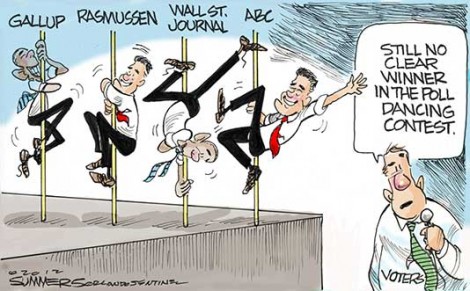
In the 2016 Election Cycle, the Republican Presidential Primary has been driven by plethora of political polls.  In fact, Donald Trump regularly trumpets his lead in “all the polls”.  Yet Trump was surprised when he underperformed in the Iowa Caucuses, which has prompted bizarre tangents that the Manhattan Mogul really should have won the contest.

To try to educate enthusiastic but unsophisticated political partisans, here are some things to look for when considering  the merits of polls.

Internet polls are unreliable.  If this were not the case, former Representative RON Paul (R-TX 14th & 22nd) would have been the GOP nominee in 2008 and 2012 based on Internet Polling.  There is no sampling, nor fail-safe ways to prevent over-voting.  Internet polls do give an indication of social media enthusiasm, but this can be gamed and is not indicative of real grassroots support.

For the primaries, national polls are misleading as they mainly give a gauge of name recognition. If a candidate is well known, such as Hillary Clinton (D-NY) for the Democrats or Donald Trump competing in the Republican primaries, national polls can seem skewed towards them.

Given this reality, such candidates may craft their message to be one of inevitability.  This pitch can be a perception that the nomination process is a coronation or that the leader in the national polls will sweep the table.

There are some sources, such as Real Clear Politics, which will combine polls to give a national average. This can give some indication about movements by candidates, but since this merges different methodologies, it is dangerous to rely upon the specific numbers.

 In our system, however, states hold primaries.  These states have different primary electorates, and often vote on different dates  so candidates’ messages are often tailored to appeal (perhaps pandering) to particular audiences.  For example, Ohio Governor John Kasich started to drop his “n”s in  and be downhome in evangelical appeal at the last South Carolina primary. Sometimes this strategy works, but it can come off as unctuous and inauthentic.

While state polls can be more illuminating, there are still lots of details one must discern in the cross tabs.  Most casual consumers of campaign news only listen for the top line results, either the pecking order or the purported percentage of support.  The crosstabs involve the margin of error.


For example, this CBS GOP bar graph for the South Carolina polling has a Margin of Error (MOE) of 5.7%.   A useful rule of thumb is that ANY poll with a Margin of Error of more than 5% is practically meaningless.   In this instance, Senator Ted Cruz could have  25.7% support or as little as 14.3%. Senator Marco Rubio (R-FL) could vault into second with up to 20.7% or drop into a tie for fourth place at 9.3%.  That large range makes most of the pecking order suspect.

Then there is the question of who makes up the body of those who are polled.  Asking any American is dubious for primaries as most of those contests are closed. So if a poll’s sample is skewed 80% Democrats for a Republican primary, the results will be apple-sauce.  A slightly more reliable class is registered voters, but without separating party affiliation, this will still be suspect.  The gold standard is likely voters for a given party.

In order to find a pool of likely voters, pollsters will ask vetting questions to ensure that the surveyed voter has cast ballots in several past elections.  This takes time and costs the pollster money, but is much more reliable than something like an internet poll with trolls clicking out of their parents’ basement.

Polling is both an art and a science.  The pollster needs to predict what is the right turnout model for an election.  Grassroots Republicans are more likely to turn out in off-year elections.  There were extraordinary turnouts of new voters and African American voters who turned out for President Barack Obama in 2008 and 2012.  Will the same numbers of voters return in elections where Mr. Obama is not standing?  It can be a major mistake for pollsters to use the wrong model when predicting elections

Determining the right sample is imperative and may explain the disparity between the polls and the Iowa Caucus results.  Prior to the Hawkeye Cauci, it was postulated that Trump needed to turn out a large swell of new participants to the caucus.  The Trump campaign did not concentrate on Get Out the Vote efforts.  Nevertheless, there was a large contingent of “new voters”, but the new voters were disinclined to support Trump.

Public polls are only news if a news source determines that it is fit to print and advances their narrative.  Some news sources have sat on poll results which do not augment their desired narrative, or they will bury them with Friday afternoon releases or on the back pages.


It used to be Gallup that was the standard, but they seemingly have bowed out of election polls. But not every polling company is the same For instance, Public Policy Polling tends to be a Democrat operation. So their results may be crafted to make mischief for Republicans or have flawed methodology.

The manner which a prospective pollee is contacted may influence the results.  It used to be that telephone polling was pretty reliable. However, now that many households have dropped land-lines, results including cell-phone callers can be questionable.  When you call also matters. If pollsters will reach fewer Republicans at home during weekends, which may adversely affect the numbers. There is some thought that people are more likely to tell pollsters that they support Trump if it is an automated call rather than person to person.


Robo-call polls are not really meant to measure support for an election field but are the cover for push polling.  In puah polla, if a voter indicates that they like candidate X, they may be told adverse information meant to dampen support for that candidate. Trump has been complaining about Cruz’s robo calls about Trump dropping out, but it seems like Trump is fulfilling that premise with insinuations that he might quit if the GOP does not treat him right.


Exit polls, which are conducted on election day, after a voter has casted his ballot, often are instructive in the eleventh hour.  These exit polls can be off the mark if there is too small of a sample, if the chosen precincts are not representative of the electorate and the reality of some voters will not tell the whole truth to their interviewers.  Exit polls give news organizations a heads up on probable election results before the polls close and facilitate in forecasting end of the evening winners. Aside from inquiring about the actual candidate, exit polls can be a barometer about what were the real hot button issues for voters and give the media something to talk about as the election returns start to come in.


It is unfortunate that in the 24/7 news cycle, many media sources will use horse race polls of dubious merit to fill their time and create excitement in the electorate.  This can create false expectations by those who just scan the headlines.

There are internal polls which are commissioned by campaigns.  These internal polls can give politicians a real reading of the electorate.  These internal polls can also be enlisted to hone a message to find out what are hot button issues or what is a better way to couch a policy proposal.  But these internal polls can also convey wishful thinking.  When a campaign leaks an internal poll, they may be giving credible alternative information ignored by the drive-by media.  Or it could be releasing agiprop to staunch waning support or to create a perception of a surge.

Instead of premising political support on the bandwagon effect, voters should make up their own minds
and not be framed by the primary polls.  The reality is that the only poll that counts is on Election Day.
If the eventual winner of the primaries is not one’s cup of tea, other metrics may be called for in the General Election.


02 December 2015

Sean Penn Projects Climate Cult Shame

Sean Penn on Climate Change Deniers

Sean Penn is a progressive activist actor who of late has been championing the cause of Climate Change.   Penn's pontifications about cult-like thinking that he associates with those who oppose the campaign to combat anthropogenic climate change calls for some consideration.


Firstly, Penn referred to Fox Network Thinking.  Oh, really? (Not O'Reilly).  This may be news to Sean but the sensibilities and dispositions vary between various channels, even those owned by News Corp.  The Fox broadcast network, which Penn cited, will be launching a series next year called "Lucifer".  That is not a show to which most viewers of the Fox News Channel (FNC) would cotton.   It would be fair to characterize the Fox Business Channel as being more libertarian leaning, whereas Fox News Channel has shifted from a right center news organization in 2012 to more of an establishment Republican (ala Karl Rove) oriented network with some patches of Populism (namely O'Reilly and to some extent Sean Hannity). Factor that (sic).

Penn seems to think that anyone who disputes Climate Change consensus does not care about quality of life in any sense.  Obviously, Penn is oblivious to the Skeptical Environmentalist, Bjorn Lomborg who buys into man-made climate change, but believes that it is more effective to solve other world health issues, like clean water and malaria.

It is hard to claim that the Société de Calcul Mathématique has been brainwashed by "Fox network thinking." But Penn seems to know better. 

So many Climate Change activists rely on the myth that man-made CO2 Driven Climate Change is settled science.  When they are challenged, such eco-activists flail and invoke 97% scientific consensus, as was infamously implied by Sierra Club President Aaron Mair's embarrassing episode before the Senate Environment Committee.  At the Paris Climate Change Summit, President Barack Obama claimed that consensus was 99.5% of scientists.  These figures seem as fungible as the East Anglia hockey stick model which drove Climate Change science in 2010. 

Considering the Alinsky-like tarnishing of targets by painting them as Fox network cultists, fascistically condemning anyone who does not tow the party line and zealously refusing to engage in scientific exchanges makes inquiring minds wonder if Penn is projecting his cult charges. Wonder what really is in Penn's cocktail cup.  Hey Kool-Aid!


[C] Sean Penn as Spicoli and [R] Ray Walston as Mr. Hand in Fast Times at Ridgemont High (1982)


27 April 2015

Mining Nuggets from the Nabobs of the Nerd Prom


The White House Correspondents' Dinner has been an annual event since 1921 when the press corp rubs elbows with the Administration in a social, cocktail fueled supper.  Some serious journalists, like New York Times columnist Frank Rich have refused to go to the dinner as  it "illustrates how easily a propaganda-driven White House can enlist the Washington news media in its shows."

In recent years, the White House Correspondents' Dinner has drawn increased public attention and glamour as  the guest list has grown to be "more Hollywood". The event has evolved from a humble one night affair into a  week long celebration by celebutards, power players and the press.  The WHCD attendees certainly ate well, unlike many DC Dinners of rubber chicken.

Patrick Gavin, a reporter formerly of Politico and the Washington Examiner, produced the film "Nerd Prom" (2015) which documented the pomp and circumstance of the 2014 White House Correspondence Dinner.  The title derives from the face that most of the reporters would not have been the cool kids  in secondary school, so the White House Correspondents' Dinner is a replacement prom.  

As a political animal residing in the District of Calamity (sic), I appreciate opportunities to make light of my favorite contact sport--politics.  But knowing that the press corps is overwhelmingly liberal and  the timidity of inquiries during Presidential press briefings of late, it is unreasonable to expect that the jokes would be evenly divided.  But by mining the nuggets from the nabobs of the Nerd Prom from  Celebrity in Chief President Barack Obama and keynote comedienne Cecily Strong one can discern some interesting insights.

Cecily Strong  was the keynote speaker. While Strong is a Saturday Night Live cast member, she was not a marquis name.  Strong self-deprecatingly quipped that she was the vaguely ethnic woman featured in college recruitment brochures. Strong reveled that she was the first female host of the White House Press big bash in years.  Strong also noted: “I’m also the first straight woman to host this in 20 years, so, we finally made it, straight people.".  Thus the routine was going to be packed with progressive identity politics with an emphasis on female power and gay glory.


It was clear from the material that Strong was not a Washington insider.  She wanted to play up sex scandals in the Capital City, so she segued “It is great to be here at the Washington Hilton… is something a prostitute might say to a congressman.” Then Strong pivoted to the point by musing: “The Washington Hilton you guys. If these walls could talk. They’d probably say ‘clean me.’”  Kind of funny, but when a District of Calamity denizen associates hotels with scandals,  toe sucking at the Hay Adams (by then Clinton adviser Dick Morris) and the Mayflower (where Democrat NY Gov. Eliot Spitzer rented room 941 with his Empire Club call girl) or maybe DC Mayor Marion Berry's drug bust at the Vista.  The Capital Hilton is remembered as the Hotel where President Reagan was shot in 1981. But why let reality get in the way with a funny quip.

Strong played up the progressive press pieties by jabbing that Memories Pizza from Elkhorn Indiana would not be catering because of a rumor that Barney Frank would be attending thus they could not taste that world class Indiana Pizza.  A triple play in a homage to the homosexual lobby, a fly-over country jab and massaging the egos of Nerd Prom.  Of course, the family pizza joint does not cater (but got caught up in a media made mess over RFRA and same sex weddings in INDIANA), Rep. Frank left Congress over two years ago and these media nabobs would never be caught eating pizza in public.  Strong worked in hits on Hobby Lobby being anti-women with opposing contraception (for employees of a faith based corporation), even though that was a Supreme Court decision nearly a year old. 


Some of Strong's ziggers were sharp, but her delivery was weak.  Her stand-up did not pack a strong punch (sic).  It might have hurt that she kept looking down to read her one liners, which accented her exaggerated fake eyelashes.  It seems that she could not get use of TOTUS (Teleprompter of the United States).

Strong seemed more successful when using props and slight physical comedy.  For example, Strong scourged Congressman Aaron Schock (R-IL 18th) with a slide show mocking his travels and surfing while implying infidelity. That was less than courageous comedy as Schock announced his resignation six weeks ago over funding improprieties (not sexual harassment) and left town a month ago.    When Strong chose to savage Mr. Obama about being weak on ISIS, she could not utter his name but did an eye roll towards the President. 

Where Strong seemed equal opportunity in her irreverence was towards the media.  Strong zinged CNN over its Ebola obsession, MSNBC for being long winded and showing prison documentaries and lamenting over FoxNews losing viewers ("May they rest in peace") and being like a party scene from Weekend at Bernie's (1989) full of hot women and old guys. Strong did not spare NPR  or the Huffington Post's alliance with AOL.

 Initially, Strong said that she could not say anything about Brian Williams since  she worked for NBC.  But during the Shock and Aw surfing slideshow, Strong said sotto voce "Brian Wiliams, come on--you weren't there.".  The camera panned to a black female reporter who had a priceless look of disgust on her face. 

 It was telling how the room gravitates towards the camera, as Strong joked that print media was serving the tables and there was appreciative laughter.  It was funny when Strong spoke to CSPAN viewers in their native tongue "Meow".

Strong slammed law enforcement by claiming that the Secret Service it was the only law enforcement agency that would get in trouble if a black man was shot was edgy while fueling the police brutality narrative.  Strong's quip that Mr. Obama's hair had gotten so white that it could talk back to the police also reflected the racial divide and the false hands up don't shoot narrative.  

These "jokes" were delivered as there was civil unrest occurring in Baltimore, forty miles to the north. When the Mayor of Baltimore holds Orioles fans in their seats because there are rioters outside of Camden Yards, this ceased to be funny even for black satire. It  just shows how the Amtrak corridor elites are out of touch as well as pushing a progressive narrative.  

Vice President Joe Biden was the butt of several stinging observations.  Strong noted that her Amtrak experience was augmented by a Biden massage seat, alluding to his creepy tendency to manhandle women standing next to him.  Later, Strong quipped that our national treasure Joe Biden could be found in a ball pit at Chucky Cheese.  So much for the boomlet of Biden for President in 2016.

Strong was unabashed in her support for Hillary Clinton's White House run.  It seems that it was important to put a "real woman" in the White House, not a right woman like Carly Fiorina. No surprise from a celebrity waxing politically.  Strong did joke about foreign entities getting more favorable treatment by contributing to the Clinton fund. But Strong tried to be serious by chiding the press not to comment on Hillary's appearance, which garnered modest applause.  But the press has already been told how to cover Hillary and they know that going against these demands will cause them to loose access, get minders following them or be locked in a holding cell during events.


[L] Keegan Michael Keys at "Luther" the Anger Translator & [R] Barack Obama as  the 44th President 


of the United States at the 2015 White House Correspondents' Dinner 


As for President Obama, he always does well at these political-press love fests.  His writing was better than Mr. Obama's misplaced jocularity at the recent reception of Super Bowl Champion New England Patriots at the White House

Some feel the President Obama demeaned the office by the puckish slideshow which included a picture of the President swimming in a White House fountain. However, Mr. Obama already demeaned the prestige of the Presidency by granting an extended interview with an internet phenom whose claim to fame was bathing in a tub of Fruit Loops and milk. So when Mr. Obama opined that his new policy methodology rhymed with "Buck it", it fit right in with the vulgar values of a Daily Show and Reddit audience. 

That being said, Mr. Obama displays an odd sense of humor in public.  One wonders why he continually goes back to birther jokes-- is this a political dog whistle, a psychological perseveration or a healthy sense of humor?  And his comment that he needed as much money as the rumored $1 Billion that the Koch Brothers will contribute to the Presidential campaign in this election as he has a middle name of "Hussein" seems strange and in your face to the American electorate.  Mr. Obama's writers had a clever quip based on Bernie Sanders that: "We could put a pot smoking, socialist back in the White House-- an Obama third term.".  Is that reductio ad absurdum humor or epater le bourgeosie?

Part of President Obama's shtick was assisted through an anger translator played by Keegan Michael Key.  This skit culminated by Mr. Obama feigning losing his cool over racial issues and his "anger translator" holding him back.  This segment had been preceded by allusions to Blackish.  This obsession with race contradicts Mr. Obama's first forays  onto the public scene as a post-racial President.  More alarmingly, playing up internalized anger over racial strife seems to fan the flames of Fergusion which are now burning in Baltimore.  

The Lame Duck President could afford to take some jabs at the Presidential field.  Obama unleashed a few stingers at Senator Ted Cruz (R-TX) which shows who liberal elites seem to fear.  While Mr. Obama mocked much of the Republican field, I do not recall any snide snips against Governor Scott Walker (R-WI).  Surprisingly, President Obama gave a towel snap to his former Secretary of State Hillary Clinton (D-AR NY).  Mr. Obama joked about a friend living in a van in Iowa, which alluded to Hillary in the "Scooby" Mystery Machine during her brief Iowa listening tour. This reveals the reality that there is not much love lost between the Clinton and the Obama "dynasties". 

All in all, the writing for the 2015 White House Correspondent's dinner was better than most Saturday Night Live political skits.  Unfortunately, Strong's delivery lacked a punch.  Mr. Obama showed his snarky side, which was smooth but not flattering.  Even his attempts at self depricating humor about being self absorbed were not endearing. But at least First Lady Michelle Obama let the crowd enjoy roast before these self important nabobs at the Nerd Prom are condemned to consume cake.  

No wonder some serious journalists refuse to make spectacles of themselves in self congratulatory ceremonies.  The only thing missing from the White House Correspondents' Dinner from entertainment awards shows is an array of lucite trophies beng awarded. It has been said that "Politics is Hollywood for ugly." But Patrick Gavin is right that the White House Correspondents' Dinner is not Hollywood for the ugly, it's a Nerd Prom.  The only trouble with this analogy is that Nerds are capable of making useful contributions (despite their social awkwardness), whereas today's crop of White House Correspondents seem like either stenographers for their Dear Leader or "jo-whore-nalists" for a progressive cause.